LipoDyne Official Website › How it works
How it worksHow Does LipoDyne Work?
Three mechanisms sit behind this panel and only one of them has a measured size.
Caffeine raises resting energy expenditure by a few per cent for a couple of hours, and 100 mg is the studied amount. Garcinia, green tea and vinegar are on the panel for appetite and fat metabolism at amounts below their trials. The pepper extract is a carrier rather than an active.
What each group of rows is supposed to do, and how much weight the evidence under it will carry.
The LipoDyne mechanism with a number attached: thermogenesis
One row, one trial, one number, and what that number is worth over a day.
Thermogenesis is the heat a body produces going about its ordinary business, and caffeine nudges it upwards. This is the best-characterised effect on the panel and the only one where the label amount and the research amount are the same figure.
In Dulloo’s 1989 study lean and post-obese volunteers took 100 mg of caffeine, and resting metabolic rate rose 3 to 4 per cent over the following 150 minutes. Repeated two-hourly across a day, that came to about 150 extra kilocalories in the lean group and 79 in the post-obese one. Astrup’s trial then ran 100, 200 and 400 mg and found the response scaled with the dose.
A single daily capsule is one instance of that effect, not a repeated one. The honest description is a modest, time-limited rise in energy expenditure in the hours after the capsule, at the low end of a curve that keeps climbing above this amount.
One more detail is worth having. A 2022 cycling trial found caffeine raised energy expenditure during exercise without changing which fuel the body was burning. The rise is in how much work is being done, not in a switch to burning fat.
What the LipoDyne botanicals are proposed to do
Three ideas, each with a literature, each tested above the amount on this label.
Three rows sit on the panel for reasons that are argued rather than measured at these amounts, and they are grouped here because they share a shape.
Hydroxycitric acid, from the garcinia row
The proposal is that hydroxycitric acid slows an enzyme used in converting carbohydrate to fat and dampens appetite. The JAMA trial tested 1,500 mg a day for twelve weeks and found nothing placebo did not do. A dose-response meta-analysis of later work reported small reductions. A 2020 review of herbal weight-loss medicines puts the disagreement in context.
Catechins, from the green tea row
Catechins are proposed to extend the life of noradrenaline, which is the same signal caffeine acts on, which is why the two are formulated together. The 1999 chamber study is the most relevant paper to this panel: green tea extract with caffeine raised 24-hour energy expenditure about 4 per cent where matched caffeine alone did not. A later meta-analysis pooled the combination trials.
Acetic acid, from the vinegar row
Acetic acid slows gastric emptying and blunts the glucose rise after a meal, which a meta-analysis of lipids and glucose and a dose-response analysis in type 2 diabetes both describe. The weight-related work is thinner and runs at liquid volumes a 150 mg powder does not approach.
Read together, those three describe a plausible set of mechanisms at amounts this panel does not reach. That is a specific statement rather than a dismissal: the mechanisms are real enough to have been tested, and the testing was done on larger quantities than a single capsule carries.
The widest view available of how this whole family performs is a network meta-analysis of 111 nutraceutical trials, and it is worth reading before any single-ingredient claim.
The LipoDyne row that acts on the other five
Why piperine is in most capsules in this category, and what it is doing in this one.
Black pepper extract is on this panel for a different reason from everything above it. It is not proposed to do anything metabolic by itself; it is there to help the rest of the capsule across the gut wall.
The paper that put piperine into supplement formulation is Shoba’s 1998 human study: 20 mg alongside 2 g of curcumin raised curcumin in the bloodstream about twentyfold. That is a large and repeatable finding about one specific pairing.
The pairing on this panel is different. There is no curcumin here, and piperine has not been shown to raise the absorption of caffeine, hydroxycitric acid or catechins in any comparable way. A review of the clinical work covers where the evidence does and does not extend.
So the fair description is a formulation convention with a strong basis in one context and no measured contribution in this one. It is harmless at 10 mg and it is the row with the clearest practical consequence for anyone on medication, which is a separate matter from what it adds to the formula.
What happens after a LipoDyne capsule, hour by hour
What one capsule does over twelve hours, separated from what it is imagined to do.
| When | What is measurable | What is proposed | What is not happening |
|---|---|---|---|
| 0 to 45 minutes | Caffeine absorbs and reaches peak blood levels. | The powder disperses and the extracts begin to absorb. | Nothing is being burned off. Absorption is not an effect. |
| 45 minutes to 3 hours | Resting metabolic rate sits a few per cent above baseline. | Catechins extend the same signalling caffeine acts on. | Fat stores are not being targeted preferentially. |
| 3 to 6 hours | The caffeine effect tapers as blood levels fall. | Acetic acid and capsaicinoid effects, if present at these amounts, are small. | No cumulative dose builds up from one capsule a day. |
| 6 to 12 hours | Roughly half the caffeine is still in circulation at the 5-hour mark for most adults. | Nothing. The botanical mechanisms are not sustained-release. | Sleep is not protected by the dose being modest if the capsule was taken late. |
| Day to day | Nothing accumulates. Each capsule is a fresh instance of the same short effect. | Any appetite-related effect would build as a habit rather than as a level. | There is no loading phase and no reason to double a dose to catch up. |
Timings describe caffeine pharmacokinetics in healthy adults, which vary widely with genetics, smoking and oral contraceptive use. The botanical columns are proposals at these amounts rather than measurements.
The table’s last column is the one worth keeping. A metabolism capsule is easy to imagine as something that works away in the background, and this one does not. It produces a small rise for a few hours and then it is finished.
That shape is also why the timing advice on the how-to-take page is specific rather than casual. A capsule whose main measurable effect lasts a few hours belongs at the start of the day, not at the end of it.
How the LipoDyne formula is built compared with the rest of its category
Six construction habits in this category, and what this panel does with each.
| The usual construction | What this panel does | What that changes |
|---|---|---|
| A stimulant base, most often caffeine, at 150 to 300 mg a serving. | Caffeine anhydrous at 100 mg, one serving a day. | A lower stimulant load than most of the shelf, and a smaller effect to match. |
| Two or three botanicals whose amounts sit inside a proprietary blend. | Five botanicals with a printed amount against each one. | Every row can be compared with its own research, which is the whole point of this website. |
| A bioavailability agent, almost always black pepper. | Black pepper extract at 10 mg, the category-standard amount. | Nothing distinctive, and the one row with a medicine interaction attached. |
| A thermogenic pepper, usually cayenne or grains of paradise. | Cayenne pepper extract at 50 mg of extract. | Present at a weight that cannot be converted into the unit its trials use. |
| Two servings a day, often split morning and afternoon. | One capsule a day. | Easier to keep, and a single instance of a short effect rather than two. |
| A 30-day bottle matched to a 30-day guarantee. | A 60-day bottle inside a 30-day window. | The decision has to be made at the half-way point of the bottle. |
The left column describes how thermogenic formulas in this price range are commonly assembled. It is context for reading the panel, not a comparison with any named product.
Two entries in that table are unusual and they pull in opposite directions. Printing every amount is better than the category norm by a wide margin. Running a 60-day bottle against a 30-day window is worse than the norm, and it is a commercial decision rather than a formulation one.
The stimulant load is the third thing worth noticing. At 100 mg this is a quiet formula by the standards of the aisle, which suits somebody who wants a metabolic nudge and does not suit somebody shopping for the strongest thing on the shelf.
Read together, the panel looks like a conservative formulation with an honest label attached to it. That is a fair summary and it is not the same as a formula whose amounts would satisfy the trials behind them.
Honest critique: what has never been measured about LipoDyne
The gap between ingredient evidence and product evidence, which is wide here.
The finished formula has never been trialled. Every study cited on this website tested a single ingredient, usually against placebo, usually at an amount larger than the one on this panel. No published work gives these six materials together in these proportions to anybody.
That is the normal condition of this category rather than a peculiarity of this bottle, and a review of 315 weight-loss supplement trials is the best single account of how little finished-product evidence exists. A meta-analysis of the isolated compounds reaches the same place from the other direction.
There is also no reason to assume the combination behaves like the sum of its rows. Ingredients interact, and a review of multi-ingredient caffeine supplements is candid about how rarely those interactions have been characterised.
What can honestly be said: the caffeine row will do what 100 mg of caffeine does, because that has been measured many times in many populations. Everything beyond that is inference, and this page has tried to mark where the inference starts.
Who publishes this LipoDyne website?
- Dulloo AG, Geissler CA, Horton T, Collins A, Miller DS. Normal caffeine consumption: influence on thermogenesis and daily energy expenditure in lean and postobese human volunteers. Am J Clin Nutr. 1989;49(1):44-50. PMID 2912010. https://pubmed.ncbi.nlm.nih.gov/2912010/
- Astrup A, Toubro S, Cannon S, Hein P, Breum L, Madsen J. Caffeine: a double-blind, placebo-controlled study of its thermogenic, metabolic, and cardiovascular effects in healthy volunteers. Am J Clin Nutr. 1990;51(5):759-67. PMID 2333832. https://pubmed.ncbi.nlm.nih.gov/2333832/
- Ruiz-Moreno C, Amaro-Gahete FJ, Gonzalez-Garcia J, et al. Caffeine increases exercise intensity and energy expenditure but does not modify substrate oxidation during 1 h of self-paced cycling. Eur J Nutr. 2022;61(6):3285-3292. PMID 35503131. https://pubmed.ncbi.nlm.nih.gov/35503131/
- Gurley BJ, Steelman SC, Thomas SL. Multi-ingredient, caffeine-containing dietary supplements: history, safety, and efficacy. Clin Ther. 2015;37(2):275-301. PMID 25262198. https://pubmed.ncbi.nlm.nih.gov/25262198/
- Heymsfield SB, Allison DB, Vasselli JR, Pietrobelli A, Greenfield D, Nunez C. Garcinia cambogia (hydroxycitric acid) as a potential antiobesity agent: a randomized controlled trial. JAMA. 1998;280(18):1596-600. PMID 9820262. https://pubmed.ncbi.nlm.nih.gov/9820262/
- Golzarand M, Omidian M, Toolabi K. Effect of Garcinia cambogia supplement on obesity indices: A systematic review and dose-response meta-analysis. Complement Ther Med. 2020;52:102451. PMID 32951714. https://pubmed.ncbi.nlm.nih.gov/32951714/
- Maunder A, Bessell E, Lauche R, Adams J, Sainsbury A, Fuller NR. Effectiveness of herbal medicines for weight loss: A systematic review and meta-analysis of randomized controlled trials. Diabetes Obes Metab. 2020;22(6):891-903. PMID 31984610. https://pubmed.ncbi.nlm.nih.gov/31984610/
- Dulloo AG, Duret C, Rohrer D, et al. Efficacy of a green tea extract rich in catechin polyphenols and caffeine in increasing 24-h energy expenditure and fat oxidation in humans. Am J Clin Nutr. 1999;70(6):1040-5. PMID 10584049. https://pubmed.ncbi.nlm.nih.gov/10584049/
- Hursel R, Viechtbauer W, Dulloo AG, et al. The effects of catechin rich teas and caffeine on energy expenditure and fat oxidation: a meta-analysis. Obes Rev. 2011;12(7):e573-81. PMID 21366839. https://pubmed.ncbi.nlm.nih.gov/21366839/
- Hadi A, Pourmasoumi M, Najafgholizadeh A, Clark CCT, Esmaillzadeh A. The effect of apple cider vinegar on lipid profiles and glycemic parameters: a systematic review and meta-analysis of randomized clinical trials. BMC Complement Med Ther. 2021;21(1):179. PMID 34187442. https://pubmed.ncbi.nlm.nih.gov/34187442/
- Arjmandfard D, Behzadi M, Sohrabi Z, Mohammadi Sartang M. Effects of apple cider vinegar on glycemic control and insulin sensitivity in patients with type 2 diabetes: A GRADE-assessed systematic review and dose-response meta-analysis of controlled clinical trials. Front Nutr. 2025;12:1528383. PMID 39949546. https://pubmed.ncbi.nlm.nih.gov/39949546/
- Shoba G, Joy D, Joseph T, Majeed M, Rajendran R, Srinivas PS. Influence of piperine on the pharmacokinetics of curcumin in animals and human volunteers. Planta Med. 1998;64(4):353-6. PMID 9619120. https://pubmed.ncbi.nlm.nih.gov/9619120/
- Heidari H, Bagherniya M, Majeed M, Sathyapalan T, Jamialahmadi T, Sahebkar A. Curcumin-piperine co-supplementation and human health: A comprehensive review of preclinical and clinical studies. Phytother Res. 2023;37(4):1462-1487. PMID 36720711. https://pubmed.ncbi.nlm.nih.gov/36720711/
- Batsis JA, Apolzan JW, Bagley PJ, et al. A Systematic Review of Dietary Supplements and Alternative Therapies for Weight Loss. Obesity (Silver Spring). 2021;29(7):1102-1113. PMID 34159755. https://pubmed.ncbi.nlm.nih.gov/34159755/
- Bessell E, Maunder A, Lauche R, Adams J, Sainsbury A, Fuller NR. Efficacy of dietary supplements containing isolated organic compounds for weight loss: a systematic review and meta-analysis of randomised placebo-controlled trials. Int J Obes (Lond). 2021;45(8):1631-1643. PMID 33976376. https://pubmed.ncbi.nlm.nih.gov/33976376/
- Shahinfar H, Jayedi A, Torabynasab K, et al. Comparative effects of nutraceuticals on body weight in adults with overweight or obesity: A systematic review and network meta-analysis of 111 randomized clinical trials. Pharmacol Res. 2023;196:106944. PMID 37778464. https://pubmed.ncbi.nlm.nih.gov/37778464/
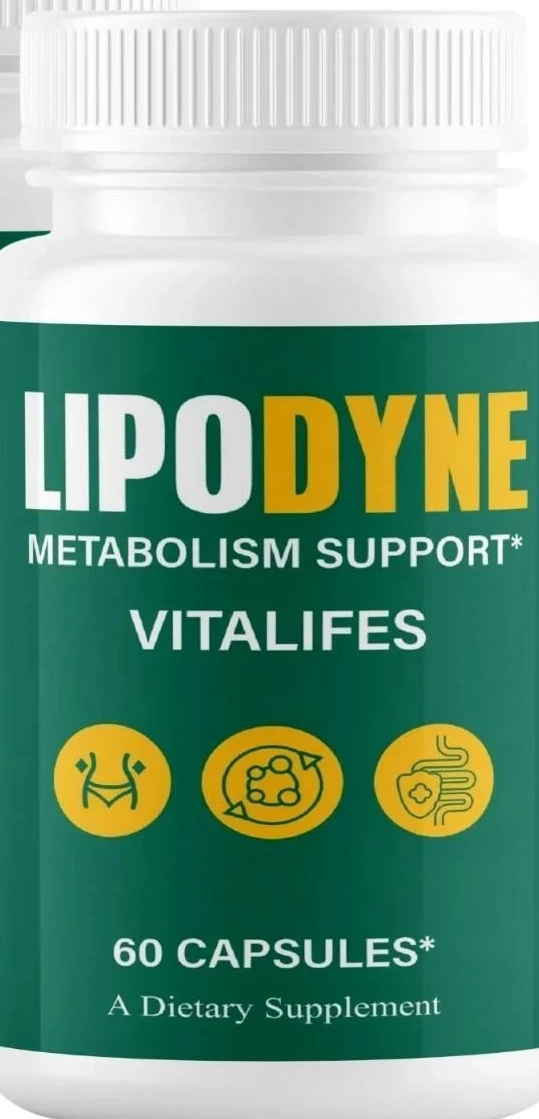
One LipoDyne capsule, one short and measurable rise
One hundred milligrams of caffeine is the amount its own research used, and there are 60 capsules in the bottle to test the routine against your own week.
$22.62 a bottle, 60 capsules · 30-day returns, seller pays postage
Order LipoDyne On The Official WebsiteOne capsule a day · 60 per bottle · lot LIP-26/GO-7994