LipoDyne Official Website › Metabolism Supplement Guide
Metabolism Supplement GuideMetabolism Supplement Guide: What The Evidence Shows
Caffeine is the only ingredient in this category with a repeatable thermogenic result in humans, and the result is small: three to four per cent of resting metabolic rate. Green tea worked at catechin doses most capsules never reach. Garcinia’s biggest trial was negative. Vinegar research poured liquid. This guide walks each of them and says what the record is.
Ingredient by ingredient, with the dose each trial used and the size of what it found.
What the category's own evidence base looks like
Two systematic reviews that between them set what any single ingredient can be expected to add.
Start with the two numbers that frame everything below. a review of 315 weight-loss supplement trials reviewed 315 randomised trials of weight-loss supplements and found 52 of them low-risk and adequately powered. Of those 52, sixteen reported a weight difference against placebo. That is the base rate a reader should carry into any claim in this aisle.
a meta-analysis of isolated compounds did the other half of the job, pooling trials of the isolated compounds rather than the finished products, and found that none of them met a 2.5 kg threshold for clinical significance. The compounds are not doing nothing; they are doing something small enough that a trial has to be careful to see it.
a network meta-analysis of 111 nutraceutical trials ran a network analysis across 111 nutraceutical trials and reached a similar place from a different direction, and a comparison of thermogenics with diet and exercise is the comparison worth keeping in view: a thermogenic supplement set against diet and exercise, where the latter is not a close contest.
There is a safety side to it. the NEJM emergency-department study found weight-loss products over-represented among supplement-related emergency visits, mostly through cardiac symptoms in young adults; a 2017 review of supplement-related liver injury and a review of adverse events in this category cover the liver and adverse-event literature.
Caffeine: the one that reliably does something, and how much
The cleanest result in the category, its actual size, and why the milligram means what it says.
Dulloo's 100 mg thermogenesis study is the trial everything else in this category is measured against. Lean and post-obese volunteers were given 100 mg of caffeine and their resting metabolic rate rose three to four per cent over the following 150 minutes. Repeated two-hourly across a day it moved daily energy expenditure by 150 kcal in the lean group and 79 kcal in the post-obese one.
Astrup's dose-response trial ran 100, 200 and 400 mg and found the thermogenic response dose-dependent, which is the finding that makes a printed caffeine figure worth reading rather than skipping. a 2022 cycling trial is a more recent demonstration in a performance setting.
Two things follow for a buyer. The first is that 150 kcal a day is roughly a banana and a half, which is a real number and a modest one, and any capsule promising a transformation from a caffeine row is overselling a well-measured small effect. The second is that caffeine is a single compound, so a milligram figure on a panel is a milligram of the substance the trials gave. That is not true of any botanical extract beside it.
The ceiling is well characterised. the systematic review behind the 400 mg figure is the systematic review behind the widely quoted 400 mg a day for healthy adults, and a comprehensive review of ingested caffeine is the broader review across age groups. a review of multi-ingredient caffeine supplements looks specifically at multi-ingredient products built around caffeine, which is what almost every product in this aisle is.
Green tea: a real signal at doses most capsules do not carry
What the catechin trials found, and why an extract milligram cannot be compared with them.
Nagao's 583 mg catechin trial is the trial usually cited: a beverage delivering 583 mg of catechins a day over twelve weeks, against a control at 96 mg, with a difference in body fat at the end. a high-dose EGCG trial went further, at 857 mg of EGCG a day.
the green tea and caffeine chamber study is the more interesting one for anybody reading a combination product. It ran green tea extract with caffeine in a respiratory chamber and found the combination raised 24-hour energy expenditure, while an equivalent amount of caffeine alone did not. a meta-analysis of catechins with caffeine pooled that pairing across trials.
a 2024 dose-response meta-analysis is the dose-response analysis, a 2024 meta-analysis of catechins with exercise looks at catechins alongside exercise, and a long-term supplementation trial is the longer-term supplementation picture, which is more modest than the short trials suggest.
The catch is arithmetic rather than evidence. Those figures are catechins or EGCG, and a label almost always prints extract. An extract is some percentage catechin by weight, and unless that percentage is on the panel there is no way to convert one number into the other. A 250 mg extract row might carry 125 mg of catechins or it might carry 45.
There is a safety literature here too and it is dose-related. a systematic review of green tea safety and the US Pharmacopeia safety review review it, the LiverTox chapter on green tea is the reference chapter, the DILIN green tea study identifies a genetic susceptibility, and the SLIMQUICK case series is the case series from a specific product. NCCIH on green tea is the plain-language summary.
Garcinia cambogia: the biggest trial was the negative one
A negative JAMA trial, a positive meta-analysis, and a liver file that names the plant.
the 1998 JAMA trial put 135 overweight adults on 1,500 mg of hydroxycitric acid a day for twelve weeks and found no advantage over placebo on body weight or fat mass. It was published in JAMA in 1998 and it remains the largest and most-cited trial of the ingredient.
That is not the whole file. a dose-response meta-analysis is a dose-response meta-analysis that reaches a more favourable conclusion, and it is cited here rather than omitted, because a guide that prints only the negative result is doing the mirror image of what a sales page does. a 2020 review of herbal weight-loss medicines reviews the herbal weight-loss category around it and a scientific overview of the plant is the botanical overview. a 2023 trial in women with fatty liver is a more recent trial in a specific population.
The same extract-versus-compound problem applies and is worse here, because hydroxycitric acid content varies widely between preparations. A label printing “garcinia cambogia extract, 500 mg” with no acid percentage has given a true number that cannot be compared with the 1,500 mg of acid the trial used.
The safety literature is the reason this ingredient gets named in liver chapters. the LiverTox chapter on Garcinia cambogia is the reference, the DILIN analysis of garcinia and green tea is the network analysis covering both garcinia and green tea, and a 2016 acute liver failure report, a transplant case series and a 2019 hepatotoxicity case report are the case reports. These are uncommon events against a very large number of exposures, and they are also the reason the ingredient is worth knowing about rather than shrugging at.
Apple cider vinegar: the trials poured liquid
A twelve-week liquid trial, and why a powdered row is not a smaller version of it.
Kondo's twelve-week vinegar trial is the twelve-week Japanese trial behind almost every vinegar claim in this category. Participants drank 15 mL or 30 mL of vinegar daily, carrying roughly 750 mg and 1,500 mg of acetic acid respectively, and both groups showed modest reductions in body weight and visceral fat against placebo.
a 2025 meta-analysis of body composition is the 2025 meta-analysis of body composition and finds its effects at 30 mL a day. a meta-analysis of lipids and glucose covers lipids and glucose, a meta-analysis of postprandial glucose the postprandial glucose response specifically, and a dose-response analysis in type 2 diabetes the dose-response in type 2 diabetes.
The gap between that and a capsule is the whole issue. Vinegar powder on a panel is typically a spray-dried preparation on a carrier, and a 150 mg row cannot carry 750 mg of anything. Where the powder’s own acetic acid content is not printed, even that comparison is generous rather than precise.
There is a reason to prefer the capsule on one narrow point. a trial of tooth wear in vinegar drinkers measured tooth wear in people who drink vinegar regularly, and a review of apple vinegar's side effects reviews the oesophageal side of it. A powder in a shell avoids both. It also avoids the dose that produced the results.
Capsaicinoids: measured in the wrong unit almost everywhere
A real effect, reported in a unit almost no label prints.
Whiting's systematic review is the systematic review, a meta-analysis of red pepper and thermogenesis the meta-analysis of red pepper and thermogenesis, and a 2022 review of capsaicin and body weight the more recent review of capsaicin and body weight. Between them they land on an effect around 34 to 50 kcal a day, which is in the same territory as caffeine’s and, like caffeine’s, is real and small.
Every one of those figures is reported in capsaicinoid milligrams, because that is the compound doing the work. Labels overwhelmingly print milligrams of cayenne or of capsicum extract, which is a weight of plant material containing some unstated percentage of capsaicinoids.
So the honest position on a cayenne row with no capsaicinoid figure is that it cannot be compared with the research at all. It is not below the trial dose; it is measured in a different unit, and converting between them without the percentage would be inventing the number.
The alternative is a comparison that looks rigorous and is not: converting extract milligrams into an implied capsaicinoid figure adds a decimal point to a guess.
Black pepper extract: a carrier, and only for certain passengers
One remarkable human result, and the two limits that come attached to it.
Shoba's bioavailability study gave human volunteers 20 mg of piperine alongside curcumin and measured a two-thousand per cent rise in curcumin bioavailability. That single result is why black pepper extract appears on so many panels, and it is a genuine and striking finding.
What it is not is a general absorption enhancer for everything. a review of curcumin-piperine studies reviews the curcumin-piperine work specifically, and a review of piperine's physiological effects covers piperine’s broader physiological effects. The evidence is ingredient-specific: a pepper extract sitting next to substances it has never been tested with is doing an unproven job.
It also has a consequence outside the bottle. the CYP3A inactivation study showed piperine inactivates CYP3A, the enzyme system that clears a long list of prescription medicines. Raising absorption is the point; raising the absorption of a medicine nobody intended to change is the risk, and it is worth naming to whoever wrote the prescription.
Reading any panel in this category: four habits
Four things to do with any bottle in this aisle, in the order they are worth doing.
Look for an amount against every row
A proprietary blend prints one total for several ingredients and leaves the split unknowable. It is the single biggest difference between a label you can assess and one you cannot.
Then look for the percentage beside the extract
“Standardised to 50% hydroxycitric acid” or “95% catechins” is what turns an extract weight into a dose. Without it, a true milligram still answers the wrong question.
Count the stimulant total for your whole day
Caffeine is the one row that reliably does something, and it is also the row that decides what time of day a capsule belongs in. Count it against coffee, tea and anything else before deciding whether a figure is comfortable.
Check the artwork against the panel
Marketing graphics are produced separately from the label and are not held to the same rules. Where a graphic promises something the panel does not contain, the panel is the document that governs.
the DILIN assay of supplement contents is the reason the fourth habit matters more than it sounds. When researchers assayed supplements implicated in liver injury, the contents and the label did not always agree, and a label is still the best available document rather than a guaranteed one.
NCCIH's guidance on using supplements wisely and MedlinePlus on weight control are the plain-language versions of all of this.
What a metabolism supplement is allowed to claim, and why
The difference between a structure-function claim and a drug claim, in one paragraph each.
“Supports metabolism” is a structure-function claim. It says a substance plays a role in a normal bodily process, it does not require FDA pre-approval, and it comes with the requirement that the FDA disclaimer appears alongside it.
“Causes weight loss” is a drug claim. It asserts an effect on a condition, and a product making it would need to be approved as a drug. That is why every compliant bottle in this aisle uses the first form of words and why a website selling one should not quietly upgrade it.
The practical test is simple. Where the front of a bottle promises a transformation and the back says the statements have not been evaluated, read the back.
The modest language on a compliant label is not modesty. It is the boundary of what may be said without a trial behind it.
The short version, for somebody deciding tonight
Seven lines that carry the rest of the page.
- Caffeine works, at a size worth knowing: three to four per cent of resting metabolic rate, and around 79 to 150 kcal a day when repeated.
- Green tea catechins have a real signal at 583 mg and above. Extract weight is not catechin weight.
- Garcinia’s largest trial found nothing at 1,500 mg of hydroxycitric acid a day.
- Vinegar research used 15 to 30 mL of liquid, which a powder row cannot reproduce.
- Capsaicinoids have a real effect measured in a unit almost no label prints.
- Piperine raises the absorption of specific compounds it has been tested with.
- Across the whole category, 52 adequate trials out of 315, and no isolated compound reaching 2.5 kg.
None of that makes these ingredients pointless. It makes them small, which is a different thing, and it puts the burden on a label to be precise about amounts if it wants to be taken seriously.
A panel that prints an amount against every row is doing that. The seven checks turn this into something you can run on a bottle in a shop, and the ingredients page runs them on this one.
Who publishes this LipoDyne website?
- Dulloo AG, Geissler CA, Horton T, Collins A, Miller DS. Normal caffeine consumption: influence on thermogenesis and daily energy expenditure in lean and postobese human volunteers. Am J Clin Nutr. 1989;49(1):44-50. PMID 2912010. https://pubmed.ncbi.nlm.nih.gov/2912010/
- Astrup A, Toubro S, Cannon S, Hein P, Breum L, Madsen J. Caffeine: a double-blind, placebo-controlled study of its thermogenic, metabolic, and cardiovascular effects in healthy volunteers. Am J Clin Nutr. 1990;51(5):759-67. PMID 2333832. https://pubmed.ncbi.nlm.nih.gov/2333832/
- Ruiz-Moreno C, Amaro-Gahete FJ, Gonzalez-Garcia J, et al. Caffeine increases exercise intensity and energy expenditure but does not modify substrate oxidation during 1 h of self-paced cycling. Eur J Nutr. 2022;61(6):3285-3292. PMID 35503131. https://pubmed.ncbi.nlm.nih.gov/35503131/
- Wikoff D, Welsh BT, Henderson R, et al. Systematic review of the potential adverse effects of caffeine consumption in healthy adults, pregnant women, adolescents, and children. Food Chem Toxicol. 2017;109(Pt 1):585-648. PMID 28438661. https://pubmed.ncbi.nlm.nih.gov/28438661/
- Temple JL, Bernard C, Lipshultz SE, Czachor JD, Westphal JA, Mestre MA. The Safety of Ingested Caffeine: A Comprehensive Review. Front Psychiatry. 2017;8:80. PMID 28603504. https://pubmed.ncbi.nlm.nih.gov/28603504/
- Gurley BJ, Steelman SC, Thomas SL. Multi-ingredient, caffeine-containing dietary supplements: history, safety, and efficacy. Clin Ther. 2015;37(2):275-301. PMID 25262198. https://pubmed.ncbi.nlm.nih.gov/25262198/
- Nagao T, Hase T, Tokimitsu I. A green tea extract high in catechins reduces body fat and cardiovascular risks in humans. Obesity (Silver Spring). 2007;15(6):1473-83. PMID 17557985. https://pubmed.ncbi.nlm.nih.gov/17557985/
- Chen IJ, Liu CY, Chiu JP, Hsu CH. Therapeutic effect of high-dose green tea extract on weight reduction: A randomized, double-blind, placebo-controlled clinical trial. Clin Nutr. 2016;35(3):592-9. PMID 26093535. https://pubmed.ncbi.nlm.nih.gov/26093535/
- Dulloo AG, Duret C, Rohrer D, et al. Efficacy of a green tea extract rich in catechin polyphenols and caffeine in increasing 24-h energy expenditure and fat oxidation in humans. Am J Clin Nutr. 1999;70(6):1040-5. PMID 10584049. https://pubmed.ncbi.nlm.nih.gov/10584049/
- Hursel R, Viechtbauer W, Dulloo AG, et al. The effects of catechin rich teas and caffeine on energy expenditure and fat oxidation: a meta-analysis. Obes Rev. 2011;12(7):e573-81. PMID 21366839. https://pubmed.ncbi.nlm.nih.gov/21366839/
- Asbaghi O, Rezaei Kelishadi M, Larky DA, et al. The effects of green tea extract supplementation on body composition, obesity-related hormones and oxidative stress markers: a grade-assessed systematic review and dose-response meta-analysis of randomised controlled trials. Br J Nutr. 2024;131(7):1125-1157. PMID 38031409. https://pubmed.ncbi.nlm.nih.gov/38031409/
- Gholami F, Antonio J, Iranpour M, et al. Does green tea catechin enhance weight-loss effect of exercise training in overweight and obese individuals? a systematic review and meta-analysis of randomized trials. J Int Soc Sports Nutr. 2024;21(1):2411029. PMID 39350601. https://pubmed.ncbi.nlm.nih.gov/39350601/
- Janssens PL, Hursel R, Westerterp-Plantenga MS. Long-term green tea extract supplementation does not affect fat absorption, resting energy expenditure, and body composition in adults. J Nutr. 2015;145(5):864-70. PMID 25740906. https://pubmed.ncbi.nlm.nih.gov/25740906/
- Hu J, Webster D, Cao J, Shao A. The safety of green tea and green tea extract consumption in adults - Results of a systematic review. Regul Toxicol Pharmacol. 2018;95:412-433. PMID 29580974. https://pubmed.ncbi.nlm.nih.gov/29580974/
- Sarma DN, Barrett ML, Chavez ML, et al. Safety of green tea extracts: a systematic review by the US Pharmacopeia. Drug Saf. 2008;31(6):469-84. PMID 18484782. https://pubmed.ncbi.nlm.nih.gov/18484782/
- Hoofnagle JH, Bonkovsky HL, Phillips EJ, et al. HLA-B*35:01 and Green Tea-Induced Liver Injury. Hepatology. 2021;73(6):2484-2493. PMID 32892374. https://pubmed.ncbi.nlm.nih.gov/32892374/
- Zheng EX, Rossi S, Fontana RJ, et al. Risk of Liver Injury Associated with Green Tea Extract in SLIMQUICK Weight Loss Products: Results from the DILIN Prospective Study. Drug Saf. 2016;39(8):749-54. PMID 27189593. https://pubmed.ncbi.nlm.nih.gov/27189593/
- Green Tea. In: LiverTox: Clinical and Research Information on Drug-Induced Liver Injury. Bethesda (MD): National Institute of Diabetes and Digestive and Kidney Diseases. https://www.ncbi.nlm.nih.gov/books/NBK547925/
- Green Tea. National Center for Complementary and Integrative Health, National Institutes of Health. https://www.nccih.nih.gov/health/green-tea
- Heymsfield SB, Allison DB, Vasselli JR, Pietrobelli A, Greenfield D, Nunez C. Garcinia cambogia (hydroxycitric acid) as a potential antiobesity agent: a randomized controlled trial. JAMA. 1998;280(18):1596-600. PMID 9820262. https://pubmed.ncbi.nlm.nih.gov/9820262/
- Golzarand M, Omidian M, Toolabi K. Effect of Garcinia cambogia supplement on obesity indices: A systematic review and dose-response meta-analysis. Complement Ther Med. 2020;52:102451. PMID 32951714. https://pubmed.ncbi.nlm.nih.gov/32951714/
- Maunder A, Bessell E, Lauche R, Adams J, Sainsbury A, Fuller NR. Effectiveness of herbal medicines for weight loss: A systematic review and meta-analysis of randomized controlled trials. Diabetes Obes Metab. 2020;22(6):891-903. PMID 31984610. https://pubmed.ncbi.nlm.nih.gov/31984610/
- Semwal RB, Semwal DK, Vermaak I, Viljoen A. A comprehensive scientific overview of Garcinia cambogia. Fitoterapia. 2015;102:134-48. PMID 25732350. https://pubmed.ncbi.nlm.nih.gov/25732350/
- Tutunchi H, Arefhosseini S, Nomi-Golzar S, Ebrahimi-Mameghani M. Effects of Hydroxycitric Acid Supplementation on Body Composition, Obesity Indices, Appetite, Leptin, and Adiponectin of Women with NAFLD on a Calorie-Restricted Diet. Int J Clin Pract. 2023;2023:6492478. PMID 37476001. https://pubmed.ncbi.nlm.nih.gov/37476001/
- Vuppalanchi R, Bonkovsky HL, Ahmad J, et al. Garcinia cambogia, Either Alone or in Combination With Green Tea, Causes Moderate to Severe Liver Injury. Clin Gastroenterol Hepatol. 2022;20(6):e1416-e1425. PMID 34400337. https://pubmed.ncbi.nlm.nih.gov/34400337/
- Corey R, Werner KT, Singer A, et al. Acute liver failure associated with Garcinia cambogia use. Ann Hepatol. 2016;15(1):123-6. PMID 26626648. https://pubmed.ncbi.nlm.nih.gov/26626648/
- Lunsford KE, Bodzin AS, Reino DC, Wang HL, Busuttil RW. Dangerous dietary supplements: Garcinia cambogia-associated hepatic failure requiring transplantation. World J Gastroenterol. 2016;22(45):10071-10076. PMID 28018115. https://pubmed.ncbi.nlm.nih.gov/28018115/
- Yousaf MN, Chaudhary FS, Hodanazari SM, Sittambalam CD. Hepatotoxicity associated with Garcinia cambogia: A case report. World J Hepatol. 2019;11(11):735-742. PMID 31772720. https://pubmed.ncbi.nlm.nih.gov/31772720/
- Garcinia Cambogia. In: LiverTox: Clinical and Research Information on Drug-Induced Liver Injury. Bethesda (MD): National Institute of Diabetes and Digestive and Kidney Diseases. https://www.ncbi.nlm.nih.gov/books/NBK548087/
- Kondo T, Kishi M, Fushimi T, Ugajin S, Kaga T. Vinegar intake reduces body weight, body fat mass, and serum triglyceride levels in obese Japanese subjects. Biosci Biotechnol Biochem. 2009;73(8):1837-43. PMID 19661687. https://pubmed.ncbi.nlm.nih.gov/19661687/
- Castagna A, Ferro Y, Noto FR, et al. Effect of Apple Cider Vinegar Intake on Body Composition in Humans with Type 2 Diabetes and/or Overweight: A Systematic Review and Meta-Analysis of Randomized Controlled Trials. Nutrients. 2025;17(18):3000. PMID 41010525. https://pubmed.ncbi.nlm.nih.gov/41010525/
- Hadi A, Pourmasoumi M, Najafgholizadeh A, Clark CCT, Esmaillzadeh A. The effect of apple cider vinegar on lipid profiles and glycemic parameters: a systematic review and meta-analysis of randomized clinical trials. BMC Complement Med Ther. 2021;21(1):179. PMID 34187442. https://pubmed.ncbi.nlm.nih.gov/34187442/
- Arjmandfard D, Behzadi M, Sohrabi Z, Mohammadi Sartang M. Effects of apple cider vinegar on glycemic control and insulin sensitivity in patients with type 2 diabetes: A GRADE-assessed systematic review and dose-response meta-analysis of controlled clinical trials. Front Nutr. 2025;12:1528383. PMID 39949546. https://pubmed.ncbi.nlm.nih.gov/39949546/
- Shishehbor F, Mansoori A, Shirani F. Vinegar consumption can attenuate postprandial glucose and insulin responses; a systematic review and meta-analysis of clinical trials. Diabetes Res Clin Pract. 2017;127:1-9. PMID 28292654. https://pubmed.ncbi.nlm.nih.gov/28292654/
- Launholt TL, Kristiansen CB, Hjorth P. Safety and side effects of apple vinegar intake and its effect on metabolic parameters and body weight: a systematic review. Eur J Nutr. 2020;59(6):2273-2289. PMID 32170375. https://pubmed.ncbi.nlm.nih.gov/32170375/
- Anderson S, Gonzalez LA, Jasbi P, Johnston CS. Evidence That Daily Vinegar Ingestion May Contribute to Erosive Tooth Wear in Adults. J Med Food. 2021;24(8):894-896. PMID 33297831. https://pubmed.ncbi.nlm.nih.gov/33297831/
- Whiting S, Derbyshire E, Tiwari BK. Capsaicinoids and capsinoids. A potential role for weight management? A systematic review of the evidence. Appetite. 2012;59(2):341-8. PMID 22634197. https://pubmed.ncbi.nlm.nih.gov/22634197/
- Irandoost P, Lotfi Yagin N, Namazi N, et al. The effect of Capsaicinoids or Capsinoids in red pepper on thermogenesis in healthy adults: A systematic review and meta-analysis. Phytother Res. 2021;35(3):1358-1377. PMID 33063385. https://pubmed.ncbi.nlm.nih.gov/33063385/
- Elmas C, Gezer C. Capsaicin and Its Effects on Body Weight. J Am Nutr Assoc. 2022;41(8):831-839. PMID 34383610. https://pubmed.ncbi.nlm.nih.gov/34383610/
- Shoba G, Joy D, Joseph T, Majeed M, Rajendran R, Srinivas PS. Influence of piperine on the pharmacokinetics of curcumin in animals and human volunteers. Planta Med. 1998;64(4):353-6. PMID 9619120. https://pubmed.ncbi.nlm.nih.gov/9619120/
- Cui T, Wang Q, Tian X, Zhang K, Peng Y, Zheng J. Piperine Is a Mechanism-Based Inactivator of CYP3A. Drug Metab Dispos. 2020;48(2):123-134. PMID 31748224. https://pubmed.ncbi.nlm.nih.gov/31748224/
- Srinivasan K. Black pepper and its pungent principle-piperine: a review of diverse physiological effects. Crit Rev Food Sci Nutr. 2007;47(8):735-48. PMID 17987447. https://pubmed.ncbi.nlm.nih.gov/17987447/
- Heidari H, Bagherniya M, Majeed M, Sathyapalan T, Jamialahmadi T, Sahebkar A. Curcumin-piperine co-supplementation and human health: A comprehensive review of preclinical and clinical studies. Phytother Res. 2023;37(4):1462-1487. PMID 36720711. https://pubmed.ncbi.nlm.nih.gov/36720711/
- Batsis JA, Apolzan JW, Bagley PJ, et al. A Systematic Review of Dietary Supplements and Alternative Therapies for Weight Loss. Obesity (Silver Spring). 2021;29(7):1102-1113. PMID 34159755. https://pubmed.ncbi.nlm.nih.gov/34159755/
- Bessell E, Maunder A, Lauche R, Adams J, Sainsbury A, Fuller NR. Efficacy of dietary supplements containing isolated organic compounds for weight loss: a systematic review and meta-analysis of randomised placebo-controlled trials. Int J Obes (Lond). 2021;45(8):1631-1643. PMID 33976376. https://pubmed.ncbi.nlm.nih.gov/33976376/
- Clark JE, Welch S. Comparing effectiveness of fat burners and thermogenic supplements to diet and exercise for weight loss and cardiometabolic health: Systematic review and meta-analysis. Nutr Health. 2021;27(4):445-459. PMID 33427571. https://pubmed.ncbi.nlm.nih.gov/33427571/
- Shahinfar H, Jayedi A, Torabynasab K, et al. Comparative effects of nutraceuticals on body weight in adults with overweight or obesity: A systematic review and network meta-analysis of 111 randomized clinical trials. Pharmacol Res. 2023;196:106944. PMID 37778464. https://pubmed.ncbi.nlm.nih.gov/37778464/
- Geller AI, Shehab N, Weidle NJ, et al. Emergency Department Visits for Adverse Events Related to Dietary Supplements. N Engl J Med. 2015;373(16):1531-40. PMID 26465986. https://pubmed.ncbi.nlm.nih.gov/26465986/
- Navarro V, Avula B, Khan I, et al. The Contents of Herbal and Dietary Supplements Implicated in Liver Injury in the United States Are Frequently Mislabeled. Hepatol Commun. 2019;3(6):792-794. PMID 31168513. https://pubmed.ncbi.nlm.nih.gov/31168513/
- Navarro VJ, Khan I, Bjornsson E, Seeff LB, Serrano J, Hoofnagle JH. Liver injury from herbal and dietary supplements. Hepatology. 2017;65(1):363-373. PMID 27677775. https://pubmed.ncbi.nlm.nih.gov/27677775/
- Pittler MH, Schmidt K, Ernst E. Adverse events of herbal food supplements for body weight reduction: systematic review. Obes Rev. 2005;6(2):93-111. PMID 15836459. https://pubmed.ncbi.nlm.nih.gov/15836459/
- Using Dietary Supplements Wisely. National Center for Complementary and Integrative Health, National Institutes of Health. https://www.nccih.nih.gov/health/using-dietary-supplements-wisely
- MedlinePlus. Weight Control. Bethesda (MD): U.S. National Library of Medicine, National Institutes of Health. https://medlineplus.gov/weightcontrol.html
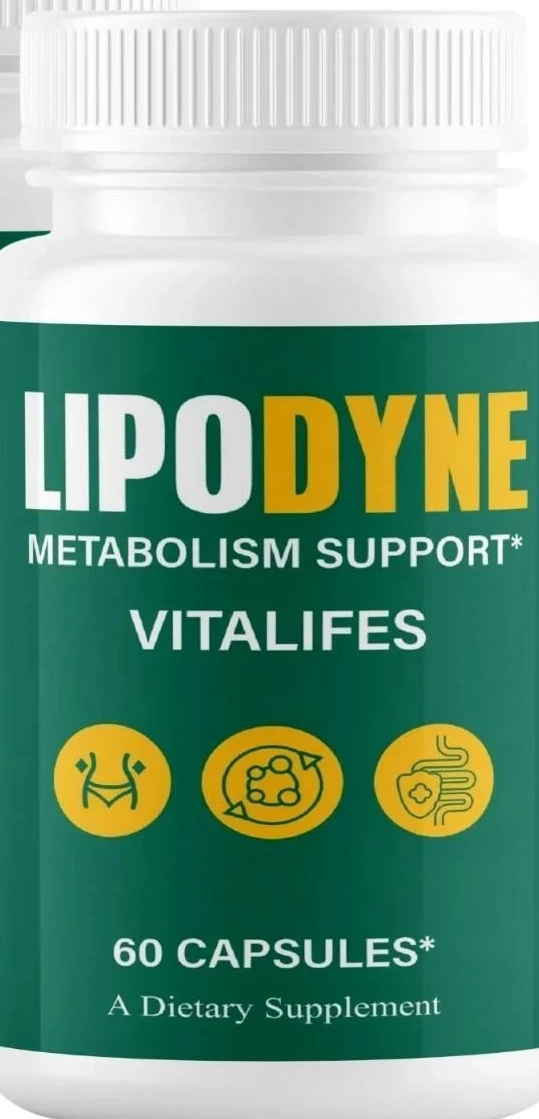
Now read the LipoDyne panel with all of that in hand
Six printed amounts, no proprietary blend, and one row present at exactly the figure its research used. The ingredients page sets each amount beside its trial dose.
$22.62 a bottle, 60 capsules · 30-day returns, seller pays postage
Order LipoDyne On The Official WebsiteOne capsule a day · 60 per bottle · lot LIP-26/GO-7994