LipoDyne Official Website › Blog › Garcinia And The JAMA Trial
Garcinia Cambogia And The JAMA Trial Nobody Quotes
The largest randomised trial of garcinia cambogia gave 1,500 mg of hydroxycitric acid a day for twelve weeks to 135 overweight adults and found nothing. It was published in JAMA in 1998 and it is still the biggest thing in the file. Here is what it ran, what came after it, and why a label printing 500 mg cannot be compared with it at all.
- Heymsfield 1998 gave 1,500 mg of hydroxycitric acid a day for twelve weeks and found no advantage over placebo.
- It was randomised, double-blind and placebo-controlled, in 135 people, and it remains the largest trial of the ingredient.
- A later dose-response meta-analysis reached a more favourable conclusion, and it is cited here rather than left out.
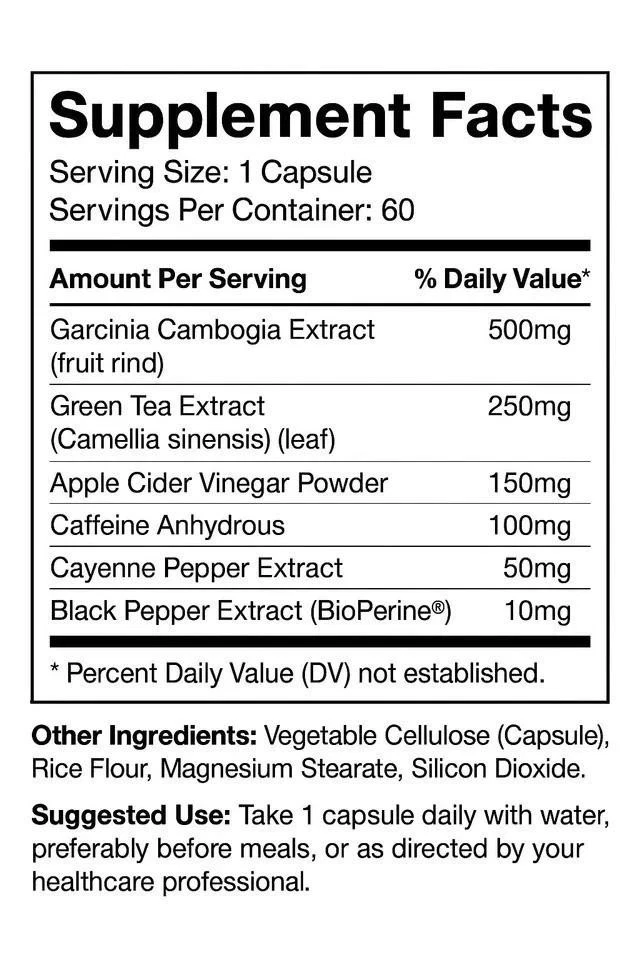
- This label prints 500 mg of EXTRACT with no acid percentage, so its acid content cannot be calculated by anyone.
- Garcinia appears in a liver-injury case literature, which is uncommon against a very large number of exposures and is the reason the ingredient is worth knowing about.
What the 1998 trial actually ran
| The 1998 trial at a glance | What it was |
|---|---|
| Participants | 135 overweight men and women |
| Design | Randomised, double-blind, placebo-controlled |
| What was given | 1,500 mg of hydroxycitric acid a day |
| How long | Twelve weeks |
| Alongside it | A high-fibre, low-energy diet in both arms |
| The result | No difference from placebo in body weight or fat mass |
| Where it was published | JAMA, 1998 |
Reported as the paper reports it. The full citation is at the foot of this article.
the 1998 JAMA trial is not an obscure paper. It appeared in JAMA, it was properly randomised and blinded, and it gave both arms the same high-fibre, low-energy diet so the only difference between them was the supplement.
Both groups lost weight, which is what a controlled diet does. Neither group lost more than the other, which is what the trial was asking. That is a clean negative result and it is the reason the ingredient has the reputation it has among people who read trials rather than labels.
The dose matters as much as the design. Fifteen hundred milligrams a day of hydroxycitric acid is a large amount, deliberately so: the trial was built to give the ingredient its best chance rather than to test a token quantity.
What was published after it
The file did not close in 1998. a dose-response meta-analysis is a dose-response meta-analysis that reaches a more encouraging conclusion, and it belongs in any honest account of this ingredient. A page that prints only the negative result is doing the mirror image of what a sales page does.
a 2020 review of herbal weight-loss medicines reviews herbal weight-loss medicines as a group and is useful for placing garcinia among its neighbours. a scientific overview of the plant is the botanical overview: what the plant is, where it grows and what is in the rind.
a 2023 trial in women with fatty liver is a more recent randomised trial in women with fatty liver disease, which is a specific population and a different question from general weight loss. It is cited here because it is part of the record, not because it transfers to a healthy adult taking a capsule.
- The largest single trial is negative.
- A pooled dose-response analysis is more favourable.
- The pooled analyses in this category are built from small studies with varying preparations.
- Nobody has trialled the finished capsule this row sits in, here or anywhere.
The LipoDyne panel puts a number on every row
Garcinia 500 mg, green tea 250 mg, and four more actives with their amounts printed rather than folded into a blend. One capsule a day, 60 to a bottle, $22.62 read on 19 September 2026.
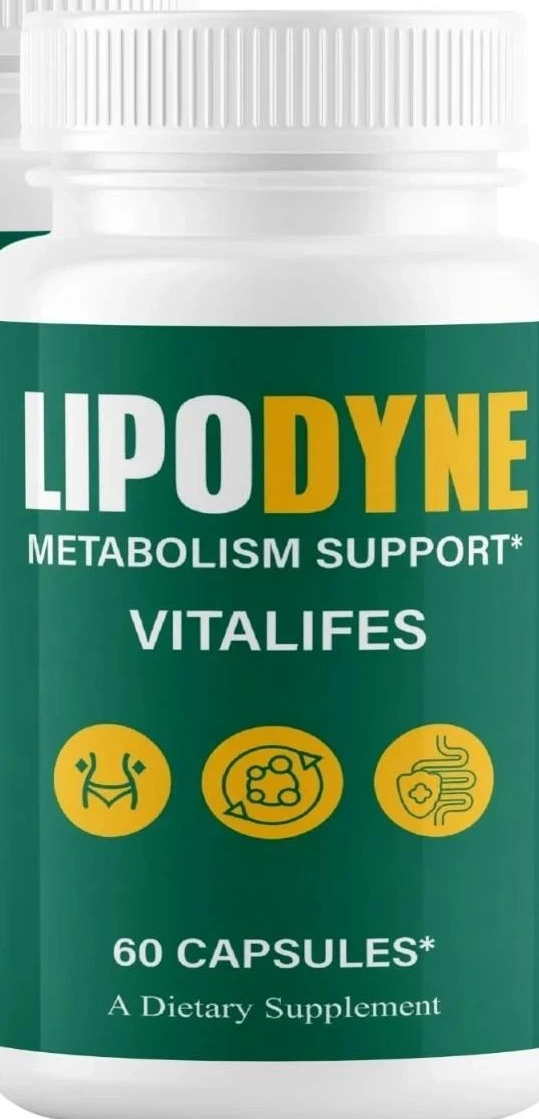
$22.62 a bottle, 60 capsules · 30-day returns, seller pays postage
Order LipoDyne On The Official WebsiteOne capsule a day · 60 per bottle · lot LIP-26/GO-7994
Why 500 mg cannot be set against 1,500 mg
The instinct is to divide. Fifteen hundred against five hundred looks like a third of the trial dose, which would at least be a comparison. It is not one, and the reason is that the two numbers are measuring different substances.
The trial dose is hydroxycitric acid: the compound itself, weighed. The label figure is extract: dried plant material from the fruit rind, of which hydroxycitric acid is some percentage. Without that percentage, the acid content of 500 mg of extract is anywhere between a little and a lot.
| What a label prints | What can be worked out | What cannot |
|---|---|---|
| Garcinia cambogia extract, 500 mg | That half a gram of extract material is in the capsule | How much hydroxycitric acid that half gram contains |
| Garcinia cambogia extract, 500 mg, standardised to 50% HCA | 250 mg of hydroxycitric acid per serving | Nothing further — this is the version that can be compared |
| Garcinia cambogia extract, 500 mg, standardised to 60% HCA | 300 mg of hydroxycitric acid per serving | Nothing further |
| Proprietary blend, 900 mg, garcinia listed first | That garcinia is the largest of the named ingredients | Its weight, and therefore everything else |
Only the second and third rows can be set beside the 1,500 mg the trial used. A percentage is what turns a weight of plant material into a dose.
Only the middle two rows of that table can be compared with a trial. This label is the first row, which is truthful about the extract and silent about the acid, and no reader outside the manufacturer can close that gap.
It is worth being explicit that this is not a criticism of the number being wrong. Five hundred milligrams is a real figure, printed on its own row, with no blend hiding it. It simply answers a different question from the one a reader is asking.
What a standardisation percentage does
A standardisation percentage is a manufacturing commitment. It says that every batch of this extract has been assayed and carries at least that proportion of the named compound, which is what makes one bottle comparable with the next and with a published trial.
It costs money, because it requires the assay and it constrains the raw material that can be bought. That is the honest reason a great many labels leave it off, and it is why its presence is a reasonable proxy for how seriously a formula was put together.
What to look for on any garcinia row
- A percentage or a ratio beside the extract weight — “50% HCA”, “60% HCA” or a ratio such as 4:1.
- The plant part, which this label gives as fruit rind.
- Whether the row sits inside a blend or carries its own weight.
- Whether the seller publishes anything behind the number, such as an assay.
On this bottle the answers run: no percentage, fruit rind named, own weight rather than a blend, and no published assay. Two of the four go the right way, which is roughly where this panel sits generally.
The liver file, stated in proportion
Garcinia appears in a hepatotoxicity literature and pretending otherwise would be dishonest. the LiverTox chapter on Garcinia cambogia is the reference chapter, the DILIN analysis of garcinia and green tea is the network analysis covering both garcinia and green tea, and a 2016 acute liver failure report, a transplant case series and a 2019 hepatotoxicity case report are case reports including acute liver failure and transplant.
Proportion matters here as much as the fact. These are uncommon events measured against an enormous number of exposures, most of them involving multi-ingredient products where the responsible component cannot be identified. A case series is a signal to take seriously and not a rate.
What it justifies is naming the ingredient rather than hiding it, which is why the side-effects page carries both liver signals on this panel in full, with the amounts involved.
Why it is still the biggest row on this panel
Five hundred milligrams is the largest single figure on this label and roughly half its total active weight. That placement is a commercial decision rather than an evidential one: garcinia is the ingredient most people in this category recognise.
The row that does the measured work on this panel is the caffeine, at a fifth of the weight. That article sets out how small even its effect is.
None of which makes the garcinia row a defect. It makes it the row most likely to be misread, and a label that prints it plainly at least allows the misreading to be corrected.
Four questions worth asking of any garcinia row
- Is a hydroxycitric acid percentage printed? Without it, no comparison with any trial is possible.
- Is the weight the extract's or the acid's? Labels say both, and they are not the same.
- Is the row inside a proprietary blend? If so, even the extract weight is unknown.
- Does the seller publish an assay, or only a lot number? A reference string is not a result.
A dietary supplement for adults of 18 and over, not a medicine, and not FDA-approved. The one claim on the bottle is “Metabolism Support”, and nothing in the garcinia literature changes that ceiling. No weight-loss result is claimed here for this capsule or for this ingredient. Anyone with a liver condition, or taking medication that affects the liver, should read the side-effects page before a first capsule.
References
- Heymsfield SB, Allison DB, Vasselli JR, Pietrobelli A, Greenfield D, Nunez C. Garcinia cambogia (hydroxycitric acid) as a potential antiobesity agent: a randomized controlled trial. JAMA. 1998;280(18):1596-600. PMID 9820262. https://pubmed.ncbi.nlm.nih.gov/9820262/
- Golzarand M, Omidian M, Toolabi K. Effect of Garcinia cambogia supplement on obesity indices: A systematic review and dose-response meta-analysis. Complement Ther Med. 2020;52:102451. PMID 32951714. https://pubmed.ncbi.nlm.nih.gov/32951714/
- Maunder A, Bessell E, Lauche R, Adams J, Sainsbury A, Fuller NR. Effectiveness of herbal medicines for weight loss: A systematic review and meta-analysis of randomized controlled trials. Diabetes Obes Metab. 2020;22(6):891-903. PMID 31984610. https://pubmed.ncbi.nlm.nih.gov/31984610/
- Semwal RB, Semwal DK, Vermaak I, Viljoen A. A comprehensive scientific overview of Garcinia cambogia. Fitoterapia. 2015;102:134-48. PMID 25732350. https://pubmed.ncbi.nlm.nih.gov/25732350/
- Tutunchi H, Arefhosseini S, Nomi-Golzar S, Ebrahimi-Mameghani M. Effects of Hydroxycitric Acid Supplementation on Body Composition, Obesity Indices, Appetite, Leptin, and Adiponectin of Women with NAFLD on a Calorie-Restricted Diet. Int J Clin Pract. 2023;2023:6492478. PMID 37476001. https://pubmed.ncbi.nlm.nih.gov/37476001/
- Vuppalanchi R, Bonkovsky HL, Ahmad J, et al. Garcinia cambogia, Either Alone or in Combination With Green Tea, Causes Moderate to Severe Liver Injury. Clin Gastroenterol Hepatol. 2022;20(6):e1416-e1425. PMID 34400337. https://pubmed.ncbi.nlm.nih.gov/34400337/
- Corey R, Werner KT, Singer A, et al. Acute liver failure associated with Garcinia cambogia use. Ann Hepatol. 2016;15(1):123-6. PMID 26626648. https://pubmed.ncbi.nlm.nih.gov/26626648/
- Lunsford KE, Bodzin AS, Reino DC, Wang HL, Busuttil RW. Dangerous dietary supplements: Garcinia cambogia-associated hepatic failure requiring transplantation. World J Gastroenterol. 2016;22(45):10071-10076. PMID 28018115. https://pubmed.ncbi.nlm.nih.gov/28018115/
- Yousaf MN, Chaudhary FS, Hodanazari SM, Sittambalam CD. Hepatotoxicity associated with Garcinia cambogia: A case report. World J Hepatol. 2019;11(11):735-742. PMID 31772720. https://pubmed.ncbi.nlm.nih.gov/31772720/
- Garcinia Cambogia. In: LiverTox: Clinical and Research Information on Drug-Induced Liver Injury. Bethesda (MD): National Institute of Diabetes and Digestive and Kidney Diseases. https://www.ncbi.nlm.nih.gov/books/NBK548087/