LipoDyne Official Website › Blog › Caffeine In A Metabolism Capsule
How Much Caffeine Is In A Metabolism Capsule, And What Does 100 mg Do?
Caffeine is the only ingredient in this category with a thermogenic result that reproduces in humans, and the result is smaller than the aisle implies. Here is the measured size of it, the daily ceiling, and how to count a capsule against the coffee you were going to drink anyway.
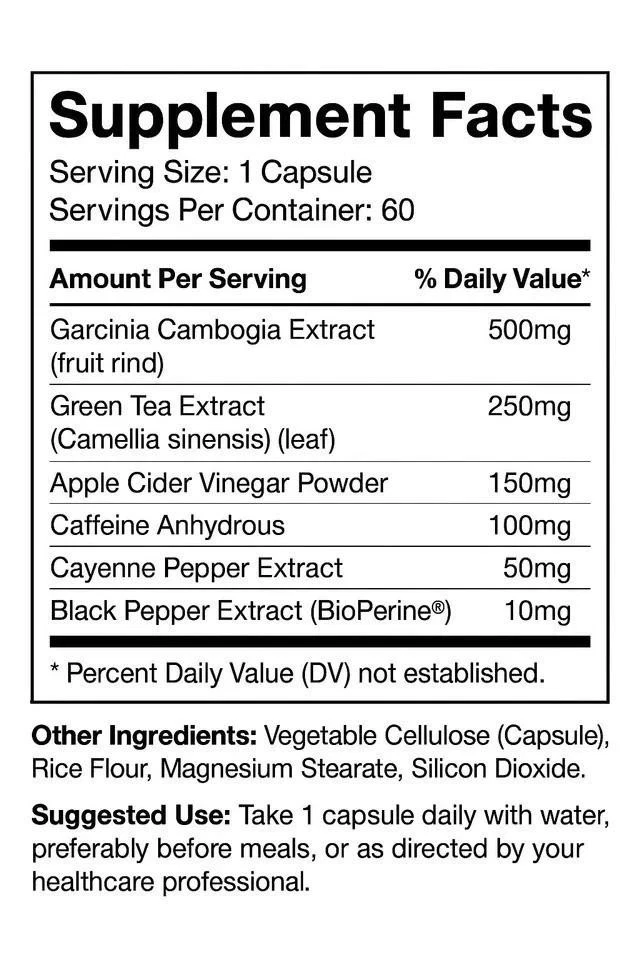
- 100 mg is the exact single dose Dulloo measured in 1989, and it raised resting metabolic rate by three to four per cent over 150 minutes.
- Repeated through a day, the same study moved total energy expenditure by 150 kcal in lean volunteers and 79 kcal in post-obese ones.
- Astrup found the response scaled with dose across 100, 200 and 400 mg.
- 400 mg a day is the figure the systematic review settles on for healthy adults.
- Caffeine is a single compound, so a milligram on a panel is a milligram of the substance. No botanical extract on the same panel can say that.
- The cost is sleep, and it is dose- and timing-related rather than a matter of tolerance.
The number everyone quotes, and where it came from
Almost every claim about caffeine and metabolism traces back to one paper. Dulloo's 100 mg thermogenesis study gave lean and post-obese volunteers 100 mg of caffeine and watched what happened to their resting metabolic rate. It rose by three to four per cent, and the rise lasted about 150 minutes.
That is a real, replicated, unglamorous finding, and it is the strongest thing anyone in this aisle has to stand on. It is also the reason a caffeine figure on a panel is worth reading carefully rather than skipping to the botanicals underneath it.
The second half of the same study is the part that gets left out. When the 100 mg was repeated every two hours through the day, total energy expenditure rose by 150 kcal in the lean group and 79 kcal in the post-obese group. Those are the numbers a capsule should be weighed against.
How big the effect actually is
| The study | The dose it gave | What it measured |
|---|---|---|
| Dulloo 1989, lean and post-obese volunteers | 100 mg, single dose | Resting metabolic rate rose 3–4% over the following 150 minutes |
| Dulloo 1989, repeated schedule | 100 mg every two hours | Daily energy expenditure up 150 kcal in lean volunteers, 79 kcal in post-obese ones |
| Astrup 1990, dose-response arm | 100, 200 and 400 mg | A thermogenic response that scaled with the dose |
| Ruiz-Moreno 2022, trained cyclists | 3 mg per kg of body weight | Performance and substrate use in an exercise setting |
| Wikoff 2017, systematic review | Up to 400 mg a day | No consistent adverse effect in healthy adults at or below that intake |
Doses as the published papers report them, retrieved rather than recalled. Each is listed in full at the foot of this article.
A hundred and fifty kilocalories is a banana and a half. Seventy-nine is a small apple. Neither is nothing, and neither is a transformation, and the distance between those two sentences is where most of the marketing in this category lives.
The post-obese figure is worth pausing on, because it is roughly half the lean one. The same dose did less in the group that had already lost weight, which is a finding about adaptation rather than about caffeine, and it complicates the simple picture of a fixed boost per milligram.
It is also worth being precise about what was measured. Energy expenditure is not weight. A study that measures the first and a label that implies the second are describing different things, and only the first has the evidence attached.
Why the dose matters more than the brand
Astrup's dose-response trial ran 100, 200 and 400 mg in the same design and found the thermogenic response scaled with the dose. That is the finding that makes a printed figure useful: two capsules with the same botanical list and different caffeine amounts are not interchangeable products.
It also cuts the other way. A larger dose is not free, and the sleep and blood-pressure sections below are the price list. A product at 300 mg a serving is making a different trade from one at 100 mg, whatever the front of the bottle says about them.
a 2022 cycling trial is a reminder that most modern caffeine research is not about metabolism at all. It is about performance, it doses by body weight rather than by a flat figure, and it is a different literature that gets borrowed to sell capsules.
- A flat 100 mg is a bigger dose for a 55 kg person than for a 95 kg one, and no label adjusts for that.
- Habitual drinkers develop partial tolerance to some effects and less to others; sleep disruption is among the effects that persist.
- The thermogenic response is measured over hours, not weeks, and no trial has followed it into a long-term weight outcome.
- A capsule taken once a day delivers one pulse. Dulloo's 150 kcal came from a dose every two hours.

Every LipoDyne amount is printed, caffeine included
Six actives with a figure against each, no proprietary blend, and 100 mg of caffeine on its own row where you can count it. One capsule a day, 60 to a bottle, and 30 days from delivery to change your mind.
$22.62 a bottle, 60 capsules · 30-day returns, seller pays postage
Order LipoDyne On The Official WebsiteOne capsule a day · 60 per bottle · lot LIP-26/GO-7994
The ceiling, and what counts towards it
the systematic review behind the 400 mg figure is the systematic review behind the 400 mg a day figure that gets quoted everywhere. It looked across the outcomes people worry about and found no consistent adverse effect in healthy adults at or below that intake. a comprehensive review of ingested caffeine is the broader review, including what is known across different age groups.
The practical problem is that almost nobody counts. A capsule at 100 mg is a quarter of that ceiling before breakfast, and the two coffees that follow it are most of the rest.
| Where the caffeine comes from | Typical amount | How it compares with one capsule |
|---|---|---|
| One LipoDyne capsule | 100 mg | The reference point for the rest of this column |
| A mug of filter coffee | roughly 95–165 mg | About the same, or a little more |
| A single espresso | roughly 60–80 mg | A little less |
| A mug of black tea | roughly 40–70 mg | Under half |
| A 330 ml cola | roughly 30–40 mg | About a third |
| A 500 ml energy drink | roughly 150–160 mg | Half as much again |
| The daily figure in the safety review | 400 mg | Four capsules’ worth, and the capsule is meant to be one a day |
Beverage figures are the ranges commonly published for ordinary servings; brewing method moves them substantially. The capsule figure is printed on the panel.
Two things fall out of that table. The first is that one capsule is roughly one coffee, which is a genuinely useful way to hold the number. The second is that a person already drinking three coffees a day who adds a capsule has not added a supplement to a neutral background; they have added a fourth coffee.
MedlinePlus on caffeine is the plain-language reference for anyone who wants the consumer version of all of this in one page.
Sleep is the real cost
a trial that dosed caffeine 0, 3 and 6 hours before bed is the study that settles the timing argument. Caffeine was dosed 0, 3 and 6 hours before bed, and sleep was disrupted at all three, including the dose six hours out. People routinely believe they are unaffected because they fall asleep; the measurement is of what happens afterwards.
a 2023 meta-analysis of caffeine and sleep pooled the sleep literature more broadly and found the same shape: less total sleep, longer to fall asleep, and less of the deep stages.
This is why a once-a-day metabolism capsule belongs with breakfast rather than with an afternoon slump. It is not a rule about supplements; it is a property of caffeine, and it applies identically to the coffee that would otherwise fill the same slot.
Blood pressure, anxiety and who should skip it
a dose-response meta-analysis of caffeine and blood pressure is a dose-response meta-analysis of caffeine and blood pressure, and it finds a small rise that scales with intake. For most healthy adults that is unremarkable; for somebody managing blood pressure it is a number worth knowing before ordering rather than after.
a meta-analysis of caffeine in panic disorder is the sharper one. In people with panic disorder, caffeine provokes panic at rates far above controls, which makes stimulant fat burners a poor category fit regardless of what else is on the panel.
Neither of those is a reason for the general reader to avoid caffeine. Both are reasons for a specific reader to check the figure on a panel, which is only possible when the figure is printed.
Caffeine inside a multi-ingredient capsule
a review of multi-ingredient caffeine supplements reviews what is known about products that combine caffeine with other actives, which describes essentially every fat burner on a shelf. The short version is that the caffeine is usually the part with the evidence and the rest of the panel is usually the part with the marketing.
That is not an argument against combination products. It is an argument for reading which component is doing the measured work, so that a decision about a bottle is a decision about the right thing.
On this panel the caffeine sits alongside a green tea extract, and that pairing has its own literature: a chamber study found green tea with caffeine raised 24-hour energy expenditure where the same caffeine alone did not. A separate article handles that properly, because the catechin arithmetic behind it is a subject of its own.
Counting your own day in five minutes
- Write down everything caffeinated you drank yesterday, with sizes.
- Put the published figure against each one from the table above.
- Add the capsule you are considering.
- Compare the total with 400 mg.
- If the total lands close to or above it, the question is which item to drop rather than whether the capsule is a good one.
That exercise is more useful than any comparison between two brands, because it answers a question about your day rather than about a label. It also tends to surprise people, which is the point.
A capsule that prints its caffeine figure makes the exercise possible. A capsule that hides it inside a proprietary blend does not, and that is the single strongest argument for preferring a panel with a number on every row. The arithmetic article covers why the same is not true of the botanical rows beside it.
Nothing here describes a weight-loss result. LipoDyne is a dietary supplement, not a drug, and it is not FDA-approved; the one claim printed on the bottle is “Metabolism Support”. The caffeine research above measured energy expenditure over hours in small groups of volunteers, which is a different thing from a change on a scale over months. Anyone under 18, pregnant, nursing or managing blood pressure or anxiety should read the side-effects page before a first capsule.
References
- Dulloo AG, Geissler CA, Horton T, Collins A, Miller DS. Normal caffeine consumption: influence on thermogenesis and daily energy expenditure in lean and postobese human volunteers. Am J Clin Nutr. 1989;49(1):44-50. PMID 2912010. https://pubmed.ncbi.nlm.nih.gov/2912010/
- Astrup A, Toubro S, Cannon S, Hein P, Breum L, Madsen J. Caffeine: a double-blind, placebo-controlled study of its thermogenic, metabolic, and cardiovascular effects in healthy volunteers. Am J Clin Nutr. 1990;51(5):759-67. PMID 2333832. https://pubmed.ncbi.nlm.nih.gov/2333832/
- Wikoff D, Welsh BT, Henderson R, et al. Systematic review of the potential adverse effects of caffeine consumption in healthy adults, pregnant women, adolescents, and children. Food Chem Toxicol. 2017;109(Pt 1):585-648. PMID 28438661. https://pubmed.ncbi.nlm.nih.gov/28438661/
- Temple JL, Bernard C, Lipshultz SE, Czachor JD, Westphal JA, Mestre MA. The Safety of Ingested Caffeine: A Comprehensive Review. Front Psychiatry. 2017;8:80. PMID 28603504. https://pubmed.ncbi.nlm.nih.gov/28603504/
- Gardiner C, Weakley J, Burke LM, et al. The effect of caffeine on subsequent sleep: A systematic review and meta-analysis. Sleep Med Rev. 2023;69:101764. PMID 36870101. https://pubmed.ncbi.nlm.nih.gov/36870101/
- Drake C, Roehrs T, Shambroom J, Roth T. Caffeine effects on sleep taken 0, 3, or 6 hours before going to bed. J Clin Sleep Med. 2013;9(11):1195-200. PMID 24235903. https://pubmed.ncbi.nlm.nih.gov/24235903/
- Abbas-Hashemi SA, Hosseininasab D, Rastgoo S, et al. The effects of caffeine supplementation on blood pressure in adults: A systematic review and dose-response meta-analysis. Clin Nutr ESPEN. 2023;58:165-177. PMID 38057002. https://pubmed.ncbi.nlm.nih.gov/38057002/
- Klevebrant L, Frick A. Effects of caffeine on anxiety and panic attacks in patients with panic disorder: A systematic review and meta-analysis. Gen Hosp Psychiatry. 2022;74:22-31. PMID 34871964. https://pubmed.ncbi.nlm.nih.gov/34871964/
- Gurley BJ, Steelman SC, Thomas SL. Multi-ingredient, caffeine-containing dietary supplements: history, safety, and efficacy. Clin Ther. 2015;37(2):275-301. PMID 25262198. https://pubmed.ncbi.nlm.nih.gov/25262198/
- MedlinePlus. Caffeine. Bethesda (MD): U.S. National Library of Medicine, National Institutes of Health. https://medlineplus.gov/caffeine.html