LipoDyne Official Website › Blog › Catechins, Not Milligrams
Green Tea Extract: The Research Counts Catechins, Not Milligrams
The green tea trials that moved body fat delivered 583 mg of catechins or 857 mg of EGCG a day. Labels print extract. Those are different quantities, the conversion between them needs a percentage almost no panel carries, and the gap can be a factor of six.
- Nagao's twelve-week trial delivered 583 mg of catechins a day against a 96 mg control.
- Chen's trial used 857 mg of EGCG a day in obese women.
- Dulloo's chamber study is the one that matters for a combination capsule: green tea with caffeine raised 24-hour energy expenditure where the same caffeine alone did not.
- Every one of those figures is catechins or EGCG. Labels almost always print extract.
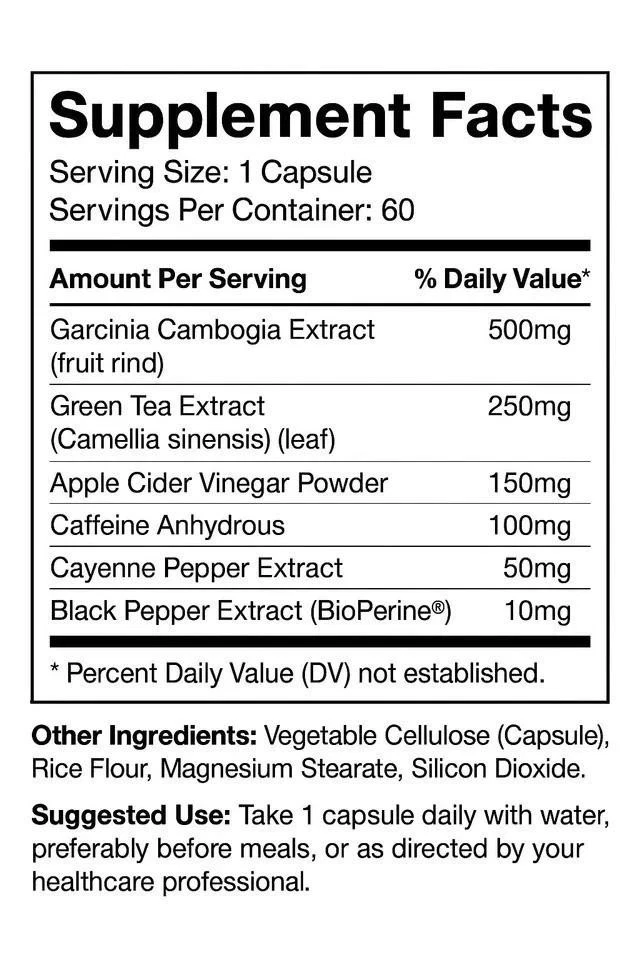
- Without a standardisation percentage, 250 mg of extract could carry 37 mg of catechins or 225 mg, and nobody outside the manufacturer can tell.
- The safety signal for concentrated extract is dose-related and sits well above the amounts printed on ordinary panels.
Two different units, used interchangeably
Green tea extract is dried, concentrated leaf material. Catechins are the family of compounds inside it, of which EGCG is the most studied. A trial gives catechins because catechins are the thing being tested; a label gives extract because extract is the thing being weighed into the capsule.
The bridge between them is a percentage. An extract standardised to 50% catechins delivers half its weight as catechins, and the arithmetic is then trivial. An extract with no stated percentage delivers an unknown amount, and the arithmetic is impossible.
That distinction is not pedantry. It is the difference between a row that can be compared with the published research and a row that cannot, and it applies to almost every botanical in this aisle.
What the catechin trials delivered
| The study | What it delivered a day | What it reported |
|---|---|---|
| Nagao 2007, twelve weeks | 583 mg of catechins, against a 96 mg control | A difference in body fat and body weight at the end of the period |
| Chen 2016, twelve weeks | 857 mg of EGCG | Reductions in body weight and waist measurements in obese women |
| Dulloo 1999, respiratory chamber | Green tea extract plus 150 mg of caffeine | 24-hour energy expenditure rose; the same caffeine alone did not |
| Hursel meta-analysis | Catechins with caffeine, pooled across trials | A small effect on weight and weight maintenance |
| Janssens, longer-term supplementation | Sustained catechin intake | A more modest picture than the short trials suggest |
Doses as the published papers report them. Every one of these is expressed in catechins or EGCG, not in extract.
Nagao's 583 mg catechin trial is the most-cited of these. Over twelve weeks, the group receiving a beverage delivering 583 mg of catechins a day showed a difference in body fat against a control group receiving 96 mg. It is a real result at a substantial dose.
a high-dose EGCG trial pushed further, at 857 mg of EGCG a day, and a 2024 dose-response meta-analysis is the dose-response analysis that tries to draw the curve those points sit on. a 2024 meta-analysis of catechins with exercise looks at catechins alongside exercise, which is where several of the positive results cluster.
a meta-analysis of catechins with caffeine pooled the catechin-plus-caffeine trials and found a small effect. Small is the operative word across this whole literature, and it is worth carrying that into any reading of a front label.
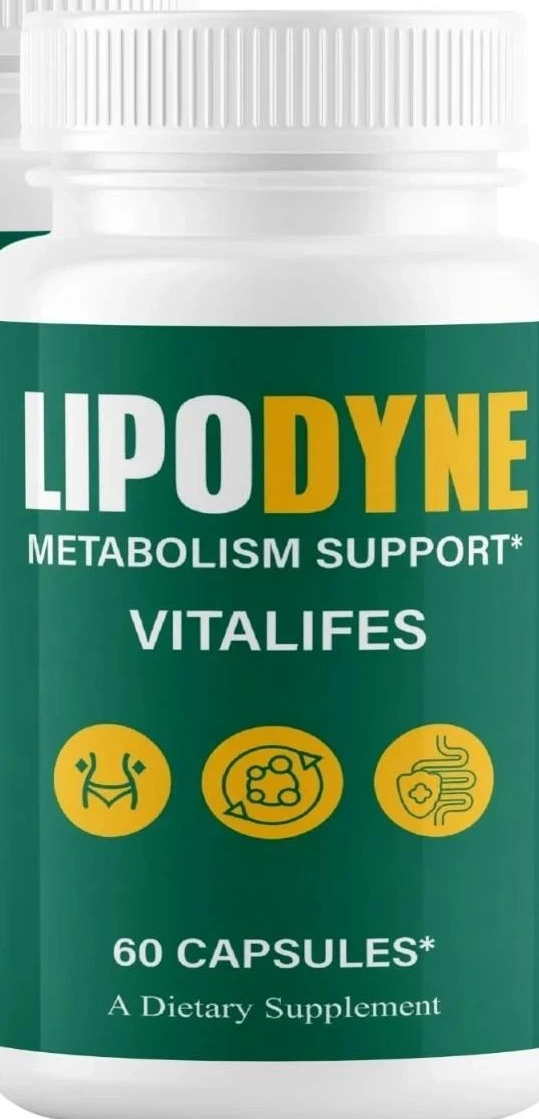
LipoDyne prints the green tea weight where you can see it
Green tea extract at 250 mg on its own row, alongside five other actives with their own figures and no proprietary blend anywhere on the panel. One capsule a day, 60 to a bottle.
$22.62 a bottle, 60 capsules · 30-day returns, seller pays postage
Order LipoDyne On The Official WebsiteOne capsule a day · 60 per bottle · lot LIP-26/GO-7994
The caffeine pairing, and why it is the interesting one
the green tea and caffeine chamber study deserves more attention than it gets from people selling green tea capsules. Volunteers in a respiratory chamber received green tea extract with caffeine, caffeine alone, or placebo. The combination raised 24-hour energy expenditure. The equivalent caffeine on its own did not.
That is the strongest single argument for a combination formula rather than a single-ingredient capsule, and it is an argument about a specific pairing rather than about stacking generally.
It also carries the same catch as everything else here. The chamber study used a characterised extract at a known catechin content alongside 150 mg of caffeine. A capsule pairing an unspecified extract with 100 mg of caffeine is in the neighbourhood of that design rather than reproducing it. The caffeine article handles the other half of the pairing.
What 250 mg of extract could mean
| If 250 mg of extract were… | Catechins per capsule | Against Nagao's 583 mg |
|---|---|---|
| 90% catechins | 225 mg | About 39% |
| 50% catechins | 125 mg | About 21% |
| 30% catechins | 75 mg | About 13% |
| 15% catechins | 37.5 mg | About 6% |
An illustration of the range, not a claim about this bottle. The label prints no percentage, so which of these four rows applies is unknown and this table is arithmetic rather than information about the capsule.
Four plausible standardisations, and the catechin content ranges from 37 mg to 225 mg. Against Nagao's 583 mg that is somewhere between six and thirty-nine per cent of the trial dose, which is a wide enough band to be useless for decision-making.
This is the honest position on any extract row without a percentage: not that it is too small, but that its size in the units the research uses is unknown. Estimating it from an industry-typical figure would be putting an invented number in the place where the important one should be.
A reader who wants the comparison has one option, which is to buy products that print the percentage. That is a reasonable thing to insist on and it narrows the field quickly.
What happens over longer periods
a long-term supplementation trial followed catechin supplementation over a longer stretch and found a more modest picture than the twelve-week trials. That pattern is familiar across the category: short trials find effects that longer ones struggle to sustain.
Part of that is adaptation and part is adherence. A twelve-week trial with supervised dosing is not the same experiment as a person remembering a capsule most mornings for a year, and the second is what actually happens.
NCCIH on green tea is the consumer-facing summary from NCCIH and is a sensible starting point for anyone who wants this without the trial-by-trial detail.
The liver signal, and the dose it sits at
Concentrated green tea extract carries a dose-related hepatotoxicity signal. the LiverTox chapter on green tea is the reference chapter, a systematic review of green tea safety is the systematic review of safety, and the US Pharmacopeia safety review is the US Pharmacopeia's own assessment, which resulted in a cautionary statement rather than a withdrawal.
the DILIN green tea study is the most useful paper for a reader trying to place their own risk: it identified a genetic susceptibility, which means the risk is concentrated in a subset rather than spread evenly.
The doses involved in the case literature are substantially above what ordinary panels print, and drinking brewed green tea is not implicated in the same way. The signal is about concentrated extracts taken as supplements, and it scales with how concentrated they are.
What about simply drinking the tea?
It is a fair question and the arithmetic is more encouraging than people expect. A brewed cup of green tea carries a meaningful quantity of catechins, which is why the trials that used beverages were able to reach 583 mg a day without anything exotic: Nagao's study delivered its dose in a drink rather than a capsule.
Brewing strength, leaf quality and steeping time move that figure substantially, so no single number is honest for a cup. What is reliable is the direction: several cups a day approach the territory the trials worked in, and that is a route with centuries of ordinary use behind it rather than a concentrated extract with a case literature.
The capsule's advantage is the same one every capsule has, which is that it happens whether or not the kettle does. That is a real advantage for adherence and it is worth weighing against a dose that cannot be calculated from the label.
Reading a green tea row in ten seconds
- Look for a percentage. “Standardised to 45% EGCG” is what makes the row comparable.
- Look for the plant part. This label says leaf, which is correct and commoner than it should be to have to check.
- Look for whether it is inside a blend. A blend removes even the extract weight.
- Add the extract weight to the rest of the panel and ask whether the total is plausible for one capsule.
- If a percentage is missing, treat the row as unknown rather than as small. Those are different conclusions.
A dietary supplement for adults of 18 and over, not a medicine, and not FDA-approved. The bottle prints one claim, “Metabolism Support”, and no green tea result quoted above is asserted for this product. Anyone with a liver condition should read the side-effects page, which carries the dose-related signal in full with the amounts involved.
References
- Nagao T, Hase T, Tokimitsu I. A green tea extract high in catechins reduces body fat and cardiovascular risks in humans. Obesity (Silver Spring). 2007;15(6):1473-83. PMID 17557985. https://pubmed.ncbi.nlm.nih.gov/17557985/
- Chen IJ, Liu CY, Chiu JP, Hsu CH. Therapeutic effect of high-dose green tea extract on weight reduction: A randomized, double-blind, placebo-controlled clinical trial. Clin Nutr. 2016;35(3):592-9. PMID 26093535. https://pubmed.ncbi.nlm.nih.gov/26093535/
- Dulloo AG, Duret C, Rohrer D, et al. Efficacy of a green tea extract rich in catechin polyphenols and caffeine in increasing 24-h energy expenditure and fat oxidation in humans. Am J Clin Nutr. 1999;70(6):1040-5. PMID 10584049. https://pubmed.ncbi.nlm.nih.gov/10584049/
- Hursel R, Viechtbauer W, Dulloo AG, et al. The effects of catechin rich teas and caffeine on energy expenditure and fat oxidation: a meta-analysis. Obes Rev. 2011;12(7):e573-81. PMID 21366839. https://pubmed.ncbi.nlm.nih.gov/21366839/
- Asbaghi O, Rezaei Kelishadi M, Larky DA, et al. The effects of green tea extract supplementation on body composition, obesity-related hormones and oxidative stress markers: a grade-assessed systematic review and dose-response meta-analysis of randomised controlled trials. Br J Nutr. 2024;131(7):1125-1157. PMID 38031409. https://pubmed.ncbi.nlm.nih.gov/38031409/
- Gholami F, Antonio J, Iranpour M, et al. Does green tea catechin enhance weight-loss effect of exercise training in overweight and obese individuals? a systematic review and meta-analysis of randomized trials. J Int Soc Sports Nutr. 2024;21(1):2411029. PMID 39350601. https://pubmed.ncbi.nlm.nih.gov/39350601/
- Janssens PL, Hursel R, Westerterp-Plantenga MS. Long-term green tea extract supplementation does not affect fat absorption, resting energy expenditure, and body composition in adults. J Nutr. 2015;145(5):864-70. PMID 25740906. https://pubmed.ncbi.nlm.nih.gov/25740906/
- Hu J, Webster D, Cao J, Shao A. The safety of green tea and green tea extract consumption in adults - Results of a systematic review. Regul Toxicol Pharmacol. 2018;95:412-433. PMID 29580974. https://pubmed.ncbi.nlm.nih.gov/29580974/
- Sarma DN, Barrett ML, Chavez ML, et al. Safety of green tea extracts: a systematic review by the US Pharmacopeia. Drug Saf. 2008;31(6):469-84. PMID 18484782. https://pubmed.ncbi.nlm.nih.gov/18484782/
- Hoofnagle JH, Bonkovsky HL, Phillips EJ, et al. HLA-B*35:01 and Green Tea-Induced Liver Injury. Hepatology. 2021;73(6):2484-2493. PMID 32892374. https://pubmed.ncbi.nlm.nih.gov/32892374/
- Green Tea. In: LiverTox: Clinical and Research Information on Drug-Induced Liver Injury. Bethesda (MD): National Institute of Diabetes and Digestive and Kidney Diseases. https://www.ncbi.nlm.nih.gov/books/NBK547925/
- Green Tea. National Center for Complementary and Integrative Health, National Institutes of Health. https://www.nccih.nih.gov/health/green-tea