LipoDyne Official Website › Blog › Does The Piperine Reach The Other Five Rows
Does This Capsule's Piperine Actually Reach The Other Five Ingredients?
Black pepper extract earns its place on this panel through one famous result: 20 mg of piperine raised curcumin absorption 2,000 percent in a 1998 human trial. This capsule contains no curcumin. What it does contain is five other rows — garcinia, green tea, vinegar powder, caffeine and cayenne — and the question this label invites, but never answers, is whether piperine's proven effect on one compound says anything about those five.
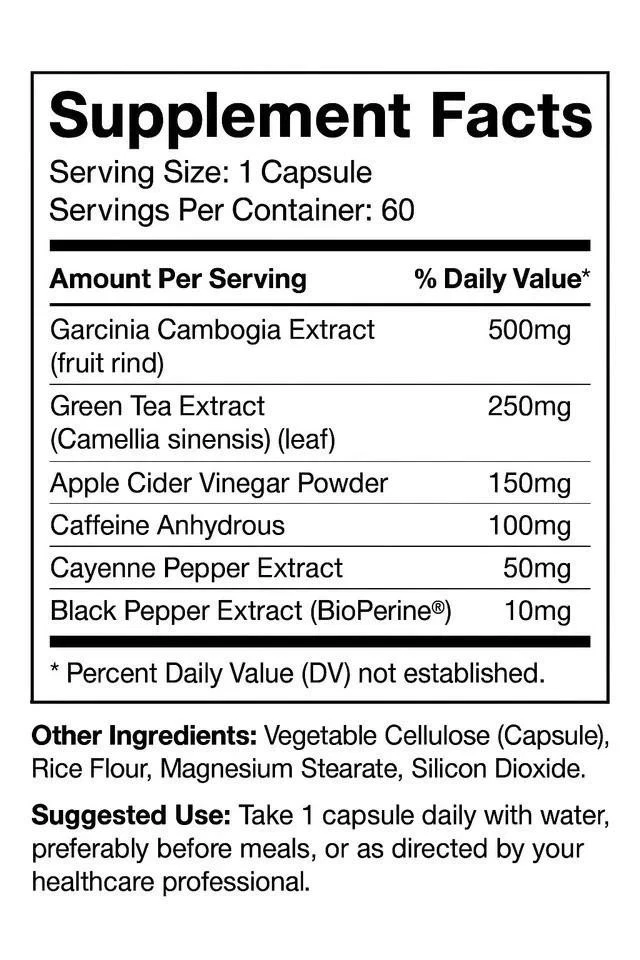
- Piperine's best-known result is specific to curcumin, which is not on this panel at all.
- One animal study found piperine also raises green tea catechin (EGCG) levels in mice — a real, relevant, but non-human result.
- No published study was found testing piperine alongside hydroxycitric acid, caffeine, or capsaicinoids, the compounds actually on this panel.
- Piperine also inactivates a liver enzyme that clears many prescription drugs, an effect already covered on this site and worth remembering here.
- “Bioavailability enhancer” on a front label is a description of a mechanism demonstrated elsewhere, not a tested claim about this specific capsule.
Why this question is different from the general piperine story
This site's own extract-milligram article already covers the basic piperine story: a real study, a real mechanism, and a printed 10 mg with no standardisation percentage attached. This article asks a narrower and more useful question that the general story does not: piperine's job is to raise the absorption of something else, so which something elses has it actually been shown to work with, and are any of them sitting in this same capsule?
That is not a rhetorical question. A capsule combining a bioavailability enhancer with five other ingredients is implicitly asking a reader to assume the enhancement applies broadly. Research does not generally support broad assumptions like that; it tests specific pairs.
What the famous study actually tested
Shoba's 1998 trial gave human volunteers 20 mg of piperine alongside 2 g of curcumin and measured a roughly 2,000 percent increase in curcumin's blood levels compared with curcumin alone. It is one of the most cited results in the supplement world, and it is entirely about curcumin.
Curcumin does not appear anywhere on this panel. The result explains why piperine is a trusted, well-marketed ingredient in general; it explains nothing about what a piperine row does inside a bottle that contains garcinia, green tea, vinegar powder, caffeine and cayenne instead.
The one compound on this panel with a real answer
Of the five other rows, exactly one has been tested alongside piperine in a published study. A 2004 study in mice found that piperine raised blood levels of EGCG, the main catechin in green tea extract, by slowing the rate at which the body breaks it down.
That is a genuinely relevant finding for this specific capsule, and it deserves to be stated plainly as a point in the product's favor. Two things temper it: the study was conducted in mice, not people, so the finding has not been confirmed to transfer at a human dose; and this panel's own catechin content is unstated in the first place, per the green tea article on this site, so an enhanced absorption of an unknown starting amount is still an unknown result.
The three rows nobody appears to have tested it against
A search of the published literature turns up no study testing piperine alongside hydroxycitric acid (the compound behind garcinia cambogia), no study testing it alongside caffeine specifically for a pharmacokinetic interaction, and no study testing it alongside capsaicinoids for an absorption effect.
| Row on this panel | Tested alongside piperine? | What is known |
|---|---|---|
| Garcinia cambogia (hydroxycitric acid) | No study found | Untested combination |
| Green tea extract (catechins/EGCG) | Yes, in mice | Piperine raised EGCG blood levels in that model |
| Apple cider vinegar (acetic acid) | No study found | Untested combination |
| Caffeine anhydrous | No study found | Untested combination |
| Cayenne pepper (capsaicinoids) | No study found | Untested combination |
One tested pairing out of five, and that one was in an animal model. “Not tested” is a statement about the literature, not a claim that nothing happens — it is simply the honest state of the evidence.
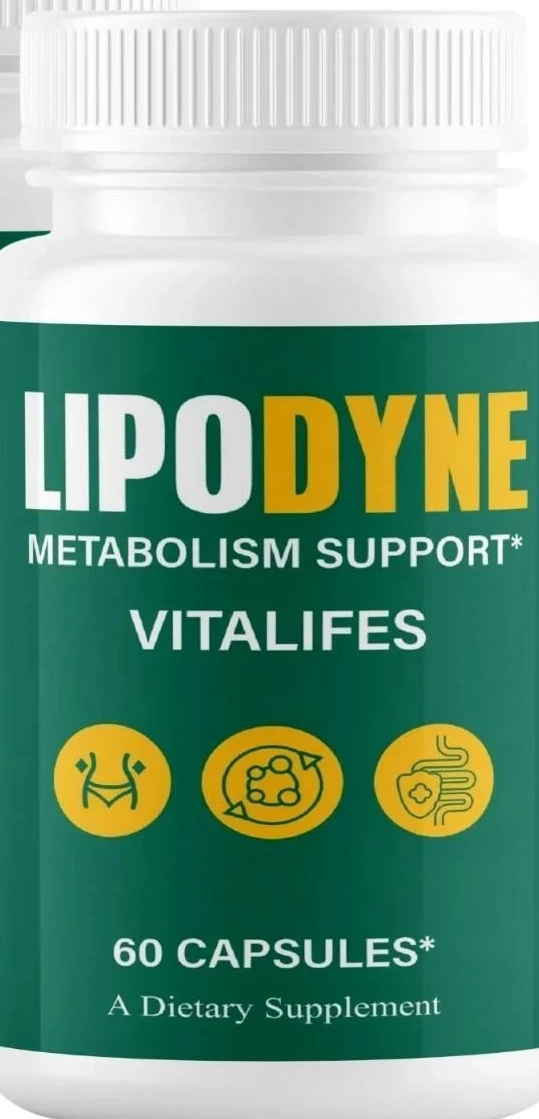
LipoDyne prints a number against all six rows
No proprietary blend, 1,060 mg accounted for, and one row present at exactly the amount its research used. One capsule a day, 60 to a bottle.
Price shown at the seller’s checkout · 30-day returns, seller pays postage
Order LipoDyne On The Official WebsiteOne capsule a day · 60 per bottle · lot LIP-26/GO-7994
How the enhancement actually works, and why that matters for the guesswork above
Piperine's absorption-boosting effect is generally attributed to two overlapping actions: it appears to inhibit certain metabolic enzymes in the gut wall and liver that would otherwise break a compound down before it reaches general circulation, and it may also slow gut motility slightly, giving more time for absorption before a compound passes through. Both actions are non-specific in principle — they are properties of how piperine interacts with the digestive and metabolic machinery in general, not properties tailored to any one target compound.
That non-specificity is exactly why a reasonable person might guess the effect generalises across the other rows on this panel, and it is also exactly why a guess is not evidence. Caffeine, for instance, is cleared mainly through a liver enzyme called CYP1A2, a different pathway from the ones piperine has been shown to act on in the curcumin and EGCG studies. Whether piperine meaningfully touches CYP1A2 at a 10 mg dose has not been established in the studies this article located, which puts the caffeine row in the same “untested” column as garcinia and vinegar rather than the “plausible by extension” column some readers might assume it belongs in.
The effect that runs the other way
The same mechanism that lets piperine raise another compound's absorption — slowing the enzyme system that breaks compounds down — has a second, less convenient side. That enzyme system, CYP3A, also clears a long list of prescription medicines, and this site's extract-milligram article already covers the study showing piperine inactivates it.
The practical version: a mechanism that can raise a blend ingredient's absorption is the same mechanism that can raise a medicine's blood level past what a prescriber intended. Anyone on regular prescription medication should factor a piperine-containing product into that conversation, independent of whether the enhancement inside the bottle has been proven to do anything.
Is 10 mg even the piperine dose the famous study used?
There is a second gap worth closing before moving on. Even setting aside which of the other five rows piperine might affect, this panel's own 10 mg figure is a weight of “black pepper extract,” not a stated weight of piperine itself. Black pepper extract is commonly standardised to a piperine percentage, most often somewhere in the range suppliers describe as 90 to 95 percent for a high-grade material used specifically for this purpose — but that percentage is a supplier specification, not something printed on this panel.
At a 95 percent standardisation, 10 mg of extract would carry roughly 9.5 mg of piperine, close to half of Shoba's 20 mg dose. At a lower, unstandardised grade, the true piperine content could be substantially less. As with the cayenne row covered in a separate article on this site, the honest position is a range bounded by what a reasonable grade could contain, not a single confirmed number, because the grade itself is not printed.
What this means for reading the front label
“Bioavailability enhancer” is accurate as a description of what piperine has been shown to do — for specific compounds, at specific doses, mostly not the compounds on this particular panel. It is a real mechanism attached to a broad-sounding claim, and the gap between the two is exactly the kind of thing a front label has no room to explain.
A fair reading of this row: real research, a real and separately useful drug-interaction caution, one relevant but animal-only result for one of the other five rows, and no published evidence either way for the remaining three. That is a more complete and more useful summary than either “proven bioavailability enhancer” or “unproven filler,” and it is the one the published literature actually supports.
None of this changes what the panel itself claims, which is worth restating plainly: this product's own label does not assert that its piperine measurably raises absorption of its garcinia, vinegar, caffeine or cayenne rows. The claim that this article has been examining is the one implied by piperine's general reputation and its position on an ingredient list beside five other actives, not a specific promise printed anywhere on this bottle. Separating a label's actual claims from an ingredient's general reputation is worth doing on every row, not only this one.
References
- Shoba G, Joy D, Joseph T, Majeed M, Rajendran R, Srinivas PS. Influence of piperine on the pharmacokinetics of curcumin in animals and human volunteers. Planta Med. 1998;64(4):353-6. PMID 9619120. https://pubmed.ncbi.nlm.nih.gov/9619120/
- Lambert JD, Hong J, Kim DH, Mishin VM, Yang CS. Piperine enhances the bioavailability of the tea polyphenol (-)-epigallocatechin-3-gallate in mice. J Nutr. 2004;134(8):1948-52. PMID 15284381. https://pubmed.ncbi.nlm.nih.gov/15284381/
- Cui T, Wang Q, Tian X, Zhang K, Peng Y, Zheng J. Piperine Is a Mechanism-Based Inactivator of CYP3A. Drug Metab Dispos. 2020;48(2):123-134. PMID 31748224. https://pubmed.ncbi.nlm.nih.gov/31748224/