LipoDyne Official Website › Blog › What An Extract Milligram Does Not Tell You
What An Extract Milligram Does Not Tell You
A panel with an amount against every row is the best thing a supplement label can do, and it still leaves the most important question open on five rows out of six. Here is the difference between a weight of extract and a dose of a compound, why it matters more than anything on the front of a bottle, and how to spot which you are holding.
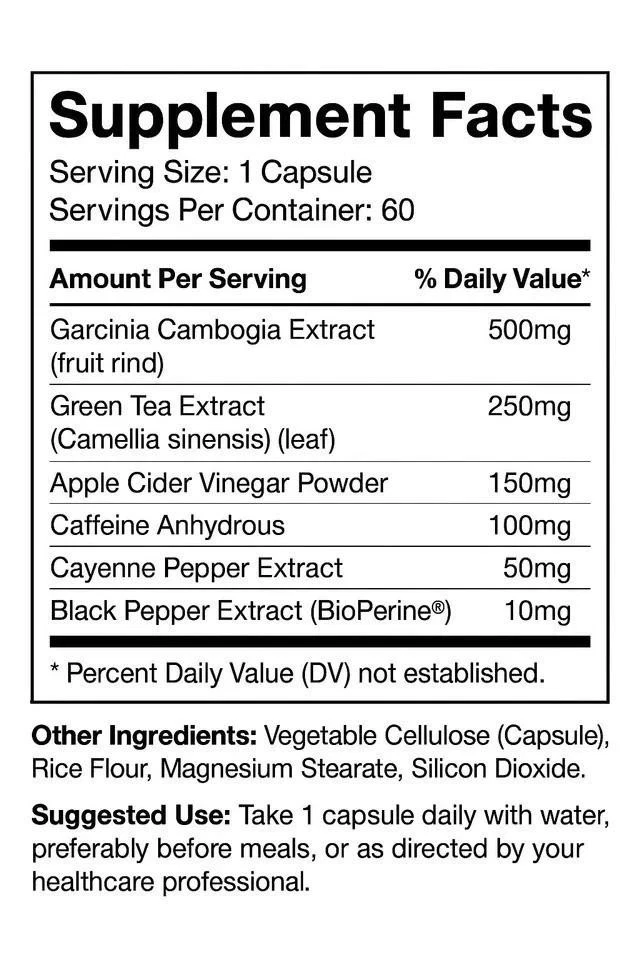
- A printed milligram of an extract is a weight of plant material, not a dose of the compound the research measured.
- The bridge between them is a standardisation percentage, and most panels do not carry one.
- A single compound — caffeine is the obvious one — needs no bridge, because the weight and the dose are the same thing.
- An extract ratio such as 4:1 describes concentration from raw herb and does not answer the compound question.
- A proprietary blend removes even the extract weight, which is a larger problem again.
- Across this category, 52 adequate trials out of 315, and no isolated compound reaching 2.5 kg in a pooled analysis.
The gap in one paragraph
A trial gives people a compound and measures what happens. A capsule contains extract, which is dried and concentrated plant material containing that compound at some concentration. The number on a panel describes the extract; the number in a paper describes the compound. They are not the same quantity and there is no way to move between them without knowing the concentration.
That is the single most useful thing to understand about supplement labels, and it is almost never explained on the packaging, for the straightforward reason that explaining it would make most rows look smaller.
It is worth saying clearly that this is not an accusation of dishonesty. A label printing 500 mg of extract is telling the truth. It is answering a question about the capsule's contents rather than the question a reader has, which is how this compares with what the research used.
Six rows, classified
| Row | What the number is | Can it be compared with the research? |
|---|---|---|
| Garcinia cambogia extract, 500 mg | A weight of extract | No — the trials dosed hydroxycitric acid and no percentage is printed |
| Green tea extract, 250 mg | A weight of extract | No — the trials dosed catechins and no percentage is printed |
| Apple cider vinegar powder, 150 mg | A weight of powder | No — the trials poured liquid and no acetic acid figure is printed |
| Caffeine anhydrous, 100 mg | A weight of the compound itself | Yes — the trials dosed caffeine, and this is caffeine |
| Cayenne pepper extract, 50 mg | A weight of extract | No — the research counts capsaicinoids and no percentage is printed |
| Black pepper extract, 10 mg | A weight of extract | Partly — the research dosed piperine, and no piperine percentage is printed |
One row of six answers the question a reader is actually asking. That is not unusual for this category; it is unusual to be able to see it, which takes a panel with a number on every row.
Five of the six rows on this panel are extracts or powders whose active content is not stated. One is a single compound. That ratio is ordinary for the category, and the fact that it can be seen at all is not: a proprietary blend would have made even this classification impossible.
Each of the five has its own article. Garcinia, green tea and vinegar powder are covered in full elsewhere; the cayenne and pepper rows are dealt with below because they raise a slightly different point.
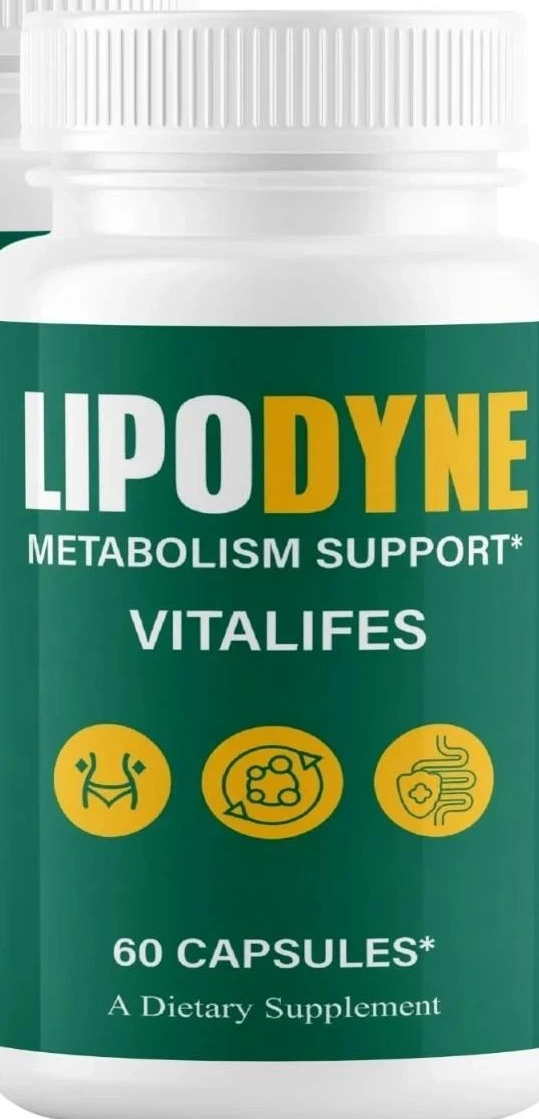
LipoDyne prints a number against all six rows
No proprietary blend, 1,060 mg accounted for, and one row present at exactly the amount its research used. One capsule a day, 60 to a bottle, $22.62 read on 19 September 2026.
$22.62 a bottle, 60 capsules · 30-day returns, seller pays postage
Order LipoDyne On The Official WebsiteOne capsule a day · 60 per bottle · lot LIP-26/GO-7994
Ratios, percentages and what each one settles
| What a label might print | What it means | How much of the compound |
|---|---|---|
| Extract, 500 mg | Half a gram of extract material | Unknown |
| Extract, 500 mg, 4:1 | Concentrated from 2 g of raw herb | Still unknown |
| Extract, 500 mg, standardised to 50% X | Half the weight is compound X | 250 mg |
| Extract, 500 mg, providing 250 mg X | Stated directly | 250 mg |
| Proprietary blend, 900 mg | A total across several ingredients | Unknown, and so is the extract weight |
Only the third and fourth rows let a reader compare a capsule with a trial. A ratio describes concentration from raw material and says nothing about the compound.
Extract ratios cause more confusion than anything else on a panel. A 4:1 extract was concentrated from four times its weight in raw herb, which tells a reader about the manufacturing and nothing about the compound they care about. Two 4:1 extracts from different suppliers can differ several-fold in active content.
A standardisation percentage is the useful one. It is a commitment that each batch has been assayed and carries at least that proportion of a named compound, which is exactly what makes a capsule comparable with a published trial.
Best of all is a label that simply states the compound weight directly: “providing 250 mg of catechins”. It removes the arithmetic and the ambiguity in one line, and it is rare enough to be worth paying attention to when it appears.
Why caffeine is the exception
Caffeine anhydrous is a purified single compound. There is no plant material around it and no percentage to apply, so 100 mg on a panel is 100 mg of the substance the trials gave.
That is why the caffeine row on this panel can be set directly against its research and the other five cannot. It is also why it is the row worth reading first on any stimulant product: it is the only figure that means what a reader assumes all the figures mean. The caffeine article covers what the dose actually does.
The same logic applies to any isolated compound on a panel — a vitamin, a mineral, an amino acid. Where the row names a substance rather than an extract, the weight is the dose.
Piperine, and a well-measured number attached to nothing
Shoba's bioavailability study gave human volunteers 20 mg of piperine with curcumin and measured a two-thousand per cent increase in curcumin absorption. It is a striking, well-conducted result, and it is why black pepper extract appears on so many panels.
The catch is that piperine's job is to raise the absorption of something else, and the evidence is specific to the compounds it has been tested with. A pepper extract sitting beside substances it has never been studied alongside is doing an unproven job, however good the original paper was.
It also has an effect outside the bottle. the CYP3A inactivation study showed piperine inactivates CYP3A, the enzyme system that clears a long list of prescription medicines, and a review of piperine's physiological effects reviews its broader physiology. Raising absorption is the intention; raising the absorption of a prescription nobody meant to change is the reason it is worth naming.
Capsaicinoids, measured in a unit labels do not use
Whiting's systematic review and a meta-analysis of red pepper and thermogenesis both report the thermogenic effect of red pepper in capsaicinoid milligrams, landing somewhere around 34 to 50 kcal a day. That is a real effect of a familiar size for this category.
Labels print milligrams of cayenne or capsicum extract, which is a weight of plant material containing some unstated percentage of capsaicinoids. The two numbers are in different units.
So a cayenne row without a capsaicinoid figure is not below the trial dose; it is incomparable with it. Those are different conclusions and only the second one is honest. Converting between them without the percentage would be adding a decimal point to a guess.
What the category's own evidence says
a review of 315 weight-loss supplement trials reviewed 315 randomised trials of weight-loss supplements and found 52 low-risk and adequately powered, of which sixteen reported a weight difference. a meta-analysis of isolated compounds pooled the isolated compounds and found none reaching a 2.5 kg threshold for clinical significance.
Those two findings are the backdrop against which every label-reading exercise in this article happens. Even a perfectly standardised panel at full trial doses would be a well-documented member of a category with modest effects.
the DILIN assay of supplement contents is the reason to prefer a label with published testing behind it: when supplements implicated in liver injury were assayed, contents and labels did not always agree. NCCIH's guidance on using supplements wisely and MedlinePlus on weight control are the plain-language versions of the sensible conclusion.
A checklist you can use in a shop
- Turn the bottle over. The front answers none of this.
- Look for the word blend or proprietary. If it is there, stop — the panel cannot be assessed.
- For each row, ask whether it names a compound or an extract.
- For each extract, look for a percentage or a stated compound weight.
- Add the stimulant figure to your own day before considering anything else.
- Treat a missing percentage as unknown rather than small.
- Ask whether the seller publishes anything behind the numbers, or only a lot code.
Seven steps, about ninety seconds, and it will separate two products that look identical from the front. It is also the only supplement skill that transfers to every bottle a person will ever pick up.
The seven checks on this website turn the same idea into a scorecard, and run it on this product, which fails three of them.
A dietary supplement for adults of 18 and over, not a medicine, and not FDA-approved. The bottle prints one claim, “Metabolism Support”, and nothing in this article asserts a weight result for it. The point of the arithmetic above is to let a reader weigh the label rather than to talk them into or out of a bottle.
References
- Shoba G, Joy D, Joseph T, Majeed M, Rajendran R, Srinivas PS. Influence of piperine on the pharmacokinetics of curcumin in animals and human volunteers. Planta Med. 1998;64(4):353-6. PMID 9619120. https://pubmed.ncbi.nlm.nih.gov/9619120/
- Cui T, Wang Q, Tian X, Zhang K, Peng Y, Zheng J. Piperine Is a Mechanism-Based Inactivator of CYP3A. Drug Metab Dispos. 2020;48(2):123-134. PMID 31748224. https://pubmed.ncbi.nlm.nih.gov/31748224/
- Srinivasan K. Black pepper and its pungent principle-piperine: a review of diverse physiological effects. Crit Rev Food Sci Nutr. 2007;47(8):735-48. PMID 17987447. https://pubmed.ncbi.nlm.nih.gov/17987447/
- Whiting S, Derbyshire E, Tiwari BK. Capsaicinoids and capsinoids. A potential role for weight management? A systematic review of the evidence. Appetite. 2012;59(2):341-8. PMID 22634197. https://pubmed.ncbi.nlm.nih.gov/22634197/
- Irandoost P, Lotfi Yagin N, Namazi N, et al. The effect of Capsaicinoids or Capsinoids in red pepper on thermogenesis in healthy adults: A systematic review and meta-analysis. Phytother Res. 2021;35(3):1358-1377. PMID 33063385. https://pubmed.ncbi.nlm.nih.gov/33063385/
- Batsis JA, Apolzan JW, Bagley PJ, et al. A Systematic Review of Dietary Supplements and Alternative Therapies for Weight Loss. Obesity (Silver Spring). 2021;29(7):1102-1113. PMID 34159755. https://pubmed.ncbi.nlm.nih.gov/34159755/
- Bessell E, Maunder A, Lauche R, Adams J, Sainsbury A, Fuller NR. Efficacy of dietary supplements containing isolated organic compounds for weight loss: a systematic review and meta-analysis of randomised placebo-controlled trials. Int J Obes (Lond). 2021;45(8):1631-1643. PMID 33976376. https://pubmed.ncbi.nlm.nih.gov/33976376/
- Navarro V, Avula B, Khan I, et al. The Contents of Herbal and Dietary Supplements Implicated in Liver Injury in the United States Are Frequently Mislabeled. Hepatol Commun. 2019;3(6):792-794. PMID 31168513. https://pubmed.ncbi.nlm.nih.gov/31168513/
- Using Dietary Supplements Wisely. National Center for Complementary and Integrative Health, National Institutes of Health. https://www.nccih.nih.gov/health/using-dietary-supplements-wisely
- MedlinePlus. Weight Control. Bethesda (MD): U.S. National Library of Medicine, National Institutes of Health. https://medlineplus.gov/weightcontrol.html