LipoDyne Official Website › Blog › Fifty Milligrams Of Cayenne, Realistically
Fifty Milligrams Of Cayenne Pepper Extract, Realistically Sized
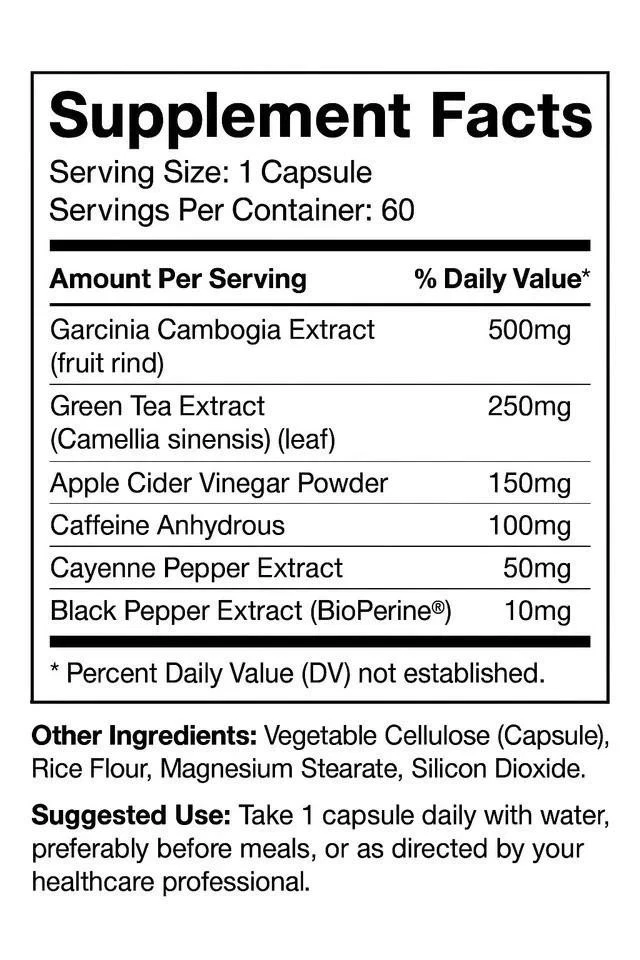
This site's extract-milligram article already explains that cayenne pepper extract and capsaicinoids are measured in different units, so the 50 mg on this panel cannot be read directly against a trial dose. That leaves a narrower, more useful question unanswered: given how commercial cayenne extract is actually made, what is a realistic range for how much capsaicinoid 50 mg of it is likely to contain, and is that range large enough to matter?
- Capsaicinoid content in raw and extracted chili material varies enormously by pepper variety, commonly cited across a very wide range.
- Commercial cayenne extracts sold to supplement makers are typically standardised capsaicinoid percentages, though this panel prints none.
- Even at a generous assumed percentage, 50 mg of extract is a small fraction of the capsaicinoid amounts used in the positive thermogenic trials covered elsewhere on this site.
- Capsaicin's gastrointestinal effects are dose-dependent and well documented in a formal safety assessment, independent of whether the weight-management effect is real.
- The honest range for this row spans from negligible to modest; it does not plausibly reach the trial-level thermogenic doses.
Why this has to be a range, not a number
Capsaicinoid content in chili peppers is not a fixed property of “cayenne” as a category. Laboratory analysis across chili pepper genotypes shows capsaicin and dihydrocapsaicin content varying dramatically between varieties, growing conditions and harvest, which is exactly why chili heat is measured on a scale (Scoville heat units) built around that variability rather than a fixed number.
A panel that prints “cayenne pepper extract, 50 mg” with no percentage and no extract ratio is, by definition, not naming which point on that range it occupies. Any single figure offered for this row would be more precise than the label itself supports.
How commercial cayenne extract is actually standardised
Ingredient suppliers to the supplement industry generally sell cayenne and Capsicum extracts pre-standardised to a stated capsaicinoid percentage, chosen by the manufacturer when they purchase the raw material. That standardisation decision happens upstream, at the ingredient-supplier level, before a finished bottle is ever labeled; whether the resulting percentage is then printed on the finished product's own panel is a separate, later decision, and this panel does not print it.
That means the manufacturer very likely does know the percentage they bought, even though this article does not. The gap here is not that the number is unknowable in principle — it is that it is not printed for the reader, which is why the next section works illustrative grades rather than a single sourced figure.
Running the numbers at three illustrative grades
The three rows below are worked examples only — hypothetical percentages chosen to span low, middle and high standardisation, not a sourced claim about what grade this bottle actually contains. No public figure for that grade exists, which is the entire point of doing the arithmetic this way.
| Illustrative capsaicinoid grade | Capsaicinoids in 50 mg of extract | Roughly where that sits against the thermogenic literature |
|---|---|---|
| Low, 1% | 0.5 mg | Small enough to sit well under most studied capsaicinoid intakes |
| Middle, 6% | 3 mg | Enters the lower part of the range the thermogenic trials generally used |
| High, 15% | 7.5 mg | Sits within the range the thermogenic trials generally used |
Three hypothetical grades, not three candidate facts. The label supplies neither the grade nor a compound weight, so no row of this table can be selected as the correct one — that absence is itself the finding.
The honest reading of this table is that a wide range of real-world outcomes is compatible with a 50 mg cayenne row, from a capsaicinoid dose too small to plausibly matter to one that sits inside the studied range. Both are physically possible given the same printed weight, and the panel gives no way to choose between them.
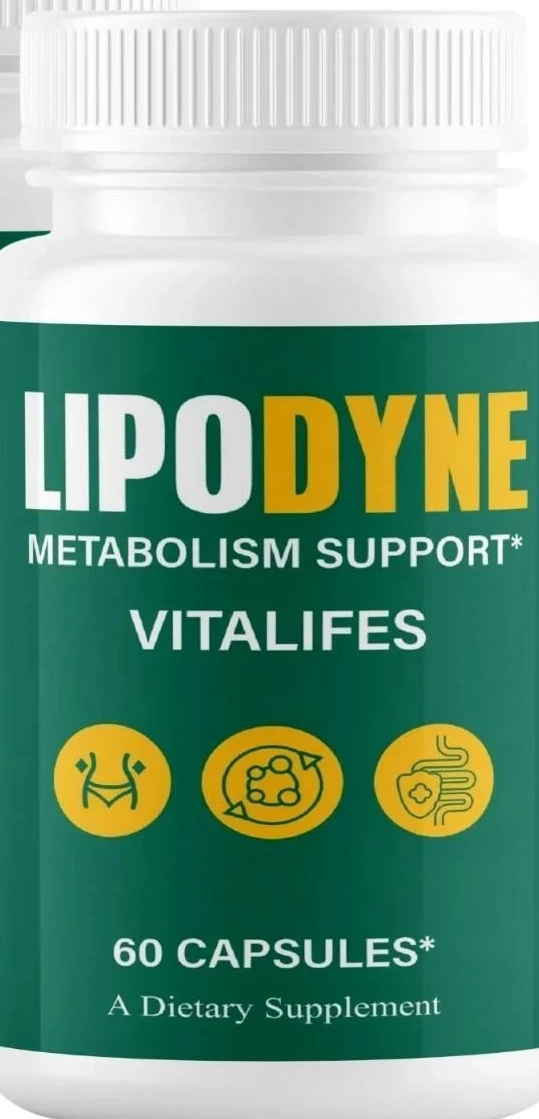
LipoDyne prints a number against all six rows
No proprietary blend, 1,060 mg accounted for, and one row present at exactly the amount its research used. One capsule a day, 60 to a bottle.
Price shown at the seller’s checkout · 30-day returns, seller pays postage
Order LipoDyne On The Official WebsiteOne capsule a day · 60 per bottle · lot LIP-26/GO-7994
Why the Scoville scale is a useful mental shortcut here, and where it breaks down
Most readers have encountered chili heat as Scoville heat units, a scale built specifically because the same pepper name can carry wildly different capsaicinoid content depending on growing conditions, so a fixed number for “cayenne” was never going to be honest. The scale exists as an admission that the plant's own chemistry does not hold still, which is the same underlying reason this panel's 50 mg figure resists a single confident conversion.
Where the analogy breaks down: Scoville units describe a whole pepper or a raw product as tasted, calibrated by dilution testing, not a purified extract sold by percentage. A supplement-grade extract has already had a grading decision made about it by the time it reaches a capsule, which is a different and in principle more precise number than a Scoville rating — it is simply a number this label does not share.
The safety side, separate from the effectiveness side
A formal safety assessment of Capsicum annuum extracts and capsaicin, published as a cosmetic and topical ingredient review, documents the well-known dose-dependent gastrointestinal effects of capsaicin exposure — irritation and discomfort at higher intakes, generally more pronounced in people not accustomed to regular chili consumption.
That caution applies regardless of which end of the content range this row actually sits at, and regardless of whether the thermogenic effect covered elsewhere on this site turns out to be real for this specific product. A small, poorly characterised dose is not automatically a safe one merely because it is small; it is simply a dose whose size is unknown in both directions.
The same assessment also notes that capsaicin sensitivity varies considerably between individuals and can be affected by regular dietary exposure to chili — someone who eats hot food often generally tolerates a given capsaicinoid dose more comfortably than someone who does not. That variability sits on top of, and is separate from, the labeling variability this article has been working through: two different people taking the identical capsule can have two different, equally normal, experiences of the same undisclosed dose.
Why a manufacturer might not print the grade at all
It is worth asking, briefly, why this information is commonly missing rather than assuming an intent to obscure. Printing a standardisation percentage is not legally required for an extract row the way the base weight is, so it is one of several optional disclosures — alongside an extract ratio, a plant part, or a compound weight — that a manufacturer can choose to include or leave off. Sourcing can also change between production runs even when the label does not, since a label is printed for a product line rather than reprinted for every incoming batch of raw material.
None of that changes the practical conclusion for a reader holding this bottle: whatever the reason, the number needed to answer the effectiveness question is not on the panel, and the honest response is the range worked out above, not a guess dressed up as a fact.
What this means for the row
Fifty milligrams of cayenne pepper extract is neither a meaningless trace nor a confirmed match for the thermogenic trials — it is a number that could plausibly be either, depending on a grading decision the label does not disclose. That is a different and more precise statement than either “too small to matter” or “matches the research,” and it is the one the evidence actually supports.
The extract-milligram article on this site covers the same principle across all six rows; this page exists because cayenne's range is wide enough, and the standardisation practice specific enough, to be worth working through in full.
References
- Usman MG, Rafii MY, Ismail MR, Malek MA, Latif MA. Capsaicin and dihydrocapsaicin determination in chili pepper genotypes using ultra-fast liquid chromatography. Molecules. 2014;19(5):6474-88. PMID 24853712. https://pubmed.ncbi.nlm.nih.gov/24853712/
- Cosmetic Ingredient Review Expert Panel. Final report on the safety assessment of capsicum annuum extract, capsicum annuum fruit extract, capsicum annuum resin, capsicum annuum fruit powder, capsicum frutescens fruit, capsicum frutescens fruit extract, capsicum frutescens resin, and capsaicin. Int J Toxicol. 2007;26 Suppl 1:3-106. PMID 17365137. https://pubmed.ncbi.nlm.nih.gov/17365137/
- Whiting S, Derbyshire E, Tiwari BK. Capsaicinoids and capsinoids. A potential role for weight management? A systematic review of the evidence. Appetite. 2012;59(2):341-8. PMID 22634197. https://pubmed.ncbi.nlm.nih.gov/22634197/